BrickLink Offline After LEGO Detects Unusual Activity, With Data Impact Still Unknown
- Joseph Williams
- 582 reads
LEGO has taken BrickLink offline while it investigates unusual activity. Users and sellers face disruption, but the scope and data impact remain unclear.
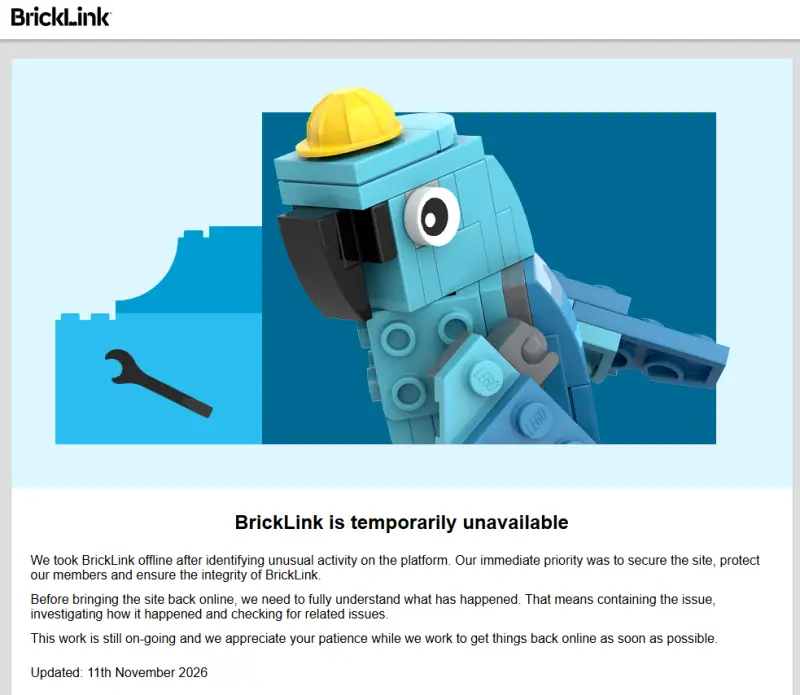
BrickLink’s shutdown puts a key tool for LEGO collectors and independent sellers out of reach, while leaving the central question unanswered: what prompted LEGO to take the marketplace offline? The company says it detected “unusual activity” and is investigating. It hasn’t confirmed an intrusion or said whether customer information was accessed.
That uncertainty matters in practical terms. BrickLink supports purchases of individual parts, sets and minifigures, and gives sellers a place to run storefronts. With the service unavailable, buyers can’t complete transactions there, while sellers lose access to their shops and information they may need to manage orders. The outage also affects users of the LEGO Ideas Designer Program page, according to reporting about the shutdown.
What LEGO has said about the outage
LEGO’s explanation focuses on containment and investigation. The company said it took the site offline after identifying unusual activity, with the stated aim of securing the service, protecting members and checking that BrickLink remains intact. It said the work includes understanding what happened, containing the issue and checking for related problems before service resumes.
That description doesn’t establish what kind of activity occurred. It could fit a range of technical issues, and LEGO has not supplied details that would let users determine the cause. Calling the incident a confirmed data breach would go beyond the available facts.
The BrickLink maintenance page had previously listed Wednesday, November 11, as the earliest possible return date. That date was later removed, and no replacement was provided. The maintenance notice was updated on November 11, 2026. Without a new estimate, users and sellers have no published timeline for planning around the disruption.
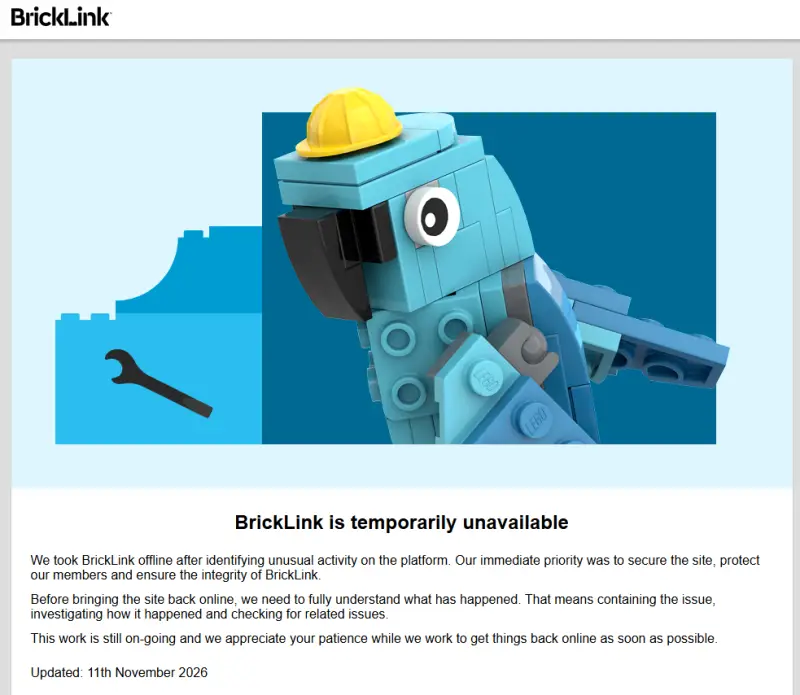
Specialist LEGO coverage placed the start of the outage around November 5. A report the next morning described a notice attributing the unavailability to “necessary work.” At that point, users reportedly couldn’t reach storefronts, profiles, order histories or the Designer Program page. Those details help show the breadth of the service interruption, but they don’t explain the underlying cause.
LEGO acquired BrickLink in 2019. The marketplace had been founded by fans and serves a different need from shopping for boxed products: it helps people find specific pieces and gives independent sellers a dedicated channel to list them. That mix makes a prolonged outage inconvenient for hobbyists and potentially disruptive for sellers whose day-to-day work depends on account and order access.
What users can do while BrickLink is unavailable
For now, users should treat unexpected messages about BrickLink accounts or payments with care. An unsolicited request to restore access, confirm payment details or resolve an urgent issue may be an attempt to take advantage of the outage. Don’t use a message’s links to sign in or submit financial information. Instead, navigate to the BrickLink site yourself or contact support through a channel you already trust.
Password reuse is another risk worth addressing. BrickLink experienced a separate shutdown in November 2023 after detecting credential stuffing, a type of attack in which previously exposed username and password pairs are tried on other services. That earlier incident doesn’t establish a connection to the current outage. It does show why a password shared between sites can put more than one account at risk: if it has been exposed elsewhere, attackers may try it on BrickLink and other services.
If you reused your BrickLink password, change it on the other accounts where you used it. Once BrickLink is available again, set a different password there as well. A password manager can generate and store unique credentials, which reduces the damage a password exposure can cause across services.
Payment concerns also deserve a measured response. The BBC reported that one BrickLink customer received repeated payment links for a limited-edition preorder she said she had already paid for. The dispute was resolved, and LEGO told the BBC it knew of no wider payment issues. No established connection has been reported between that case and the activity behind the shutdown. Users should check their own transaction records and verify unexpected requests independently rather than assume that a particular payment message is part of the outage.
What remains unclear
The next useful update needs to answer three practical questions: what activity triggered the shutdown, whether any account or payment information was involved, and when BrickLink can safely reopen. Until LEGO provides those details, buyers and sellers have to work with limited information. For users, cautious handling of messages and unique passwords are sensible steps; for sellers, the missing access and return date remain the main operational problem.
BrickLink’s maintenance page is the clearest place to check for service updates. The situation may prove to be a contained technical issue, but users should wait for evidence before drawing conclusions about data exposure. The concrete test will be whether LEGO can explain the incident and restore access with a clear account of what members need to do next.


