OXLoader Uses DLL Hijacking to Deliver Multiple Malware Families
- James Davis
- 334 reads
OXLoader hides in fake notices and software activators, then uses DLL hijacking and layered loaders to install password stealers and remote access tools.
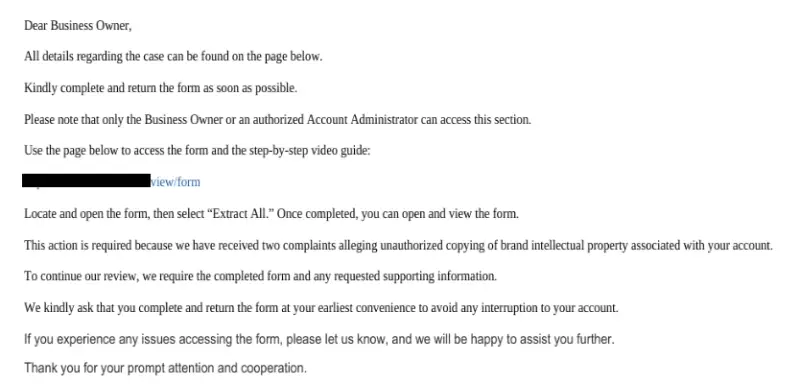
OXLoader’s main risk is its flexibility: the same loader can lead to different malware, depending on how it’s distributed and which payload follows. Recent samples use DLL hijacking to decrypt and run OXLoader, adding a delivery method to an infection chain that researchers had previously seen use malicious code embedded in legitimate executables.

The final payloads identified across the activity include Remcos, OverLord, PureRAT, Lunex Stealer, LOLD and Hermes. Their capabilities vary: some can collect browser passwords and other data, while others can provide remote access or fetch more malicious software. That variety makes the loader itself a useful detection point, even when the final malware changes.
How the downloads are disguised
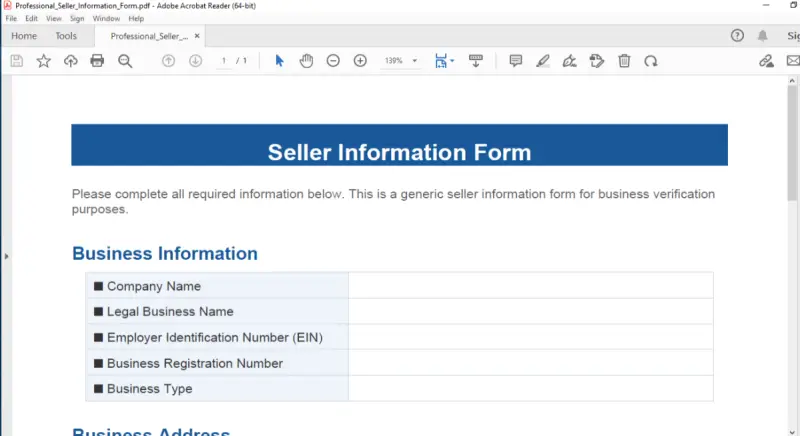
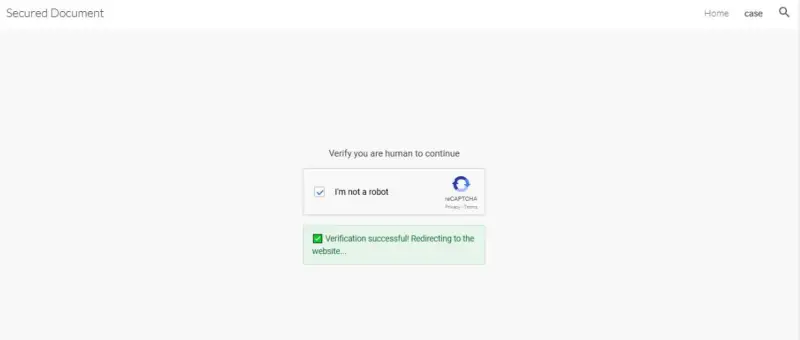
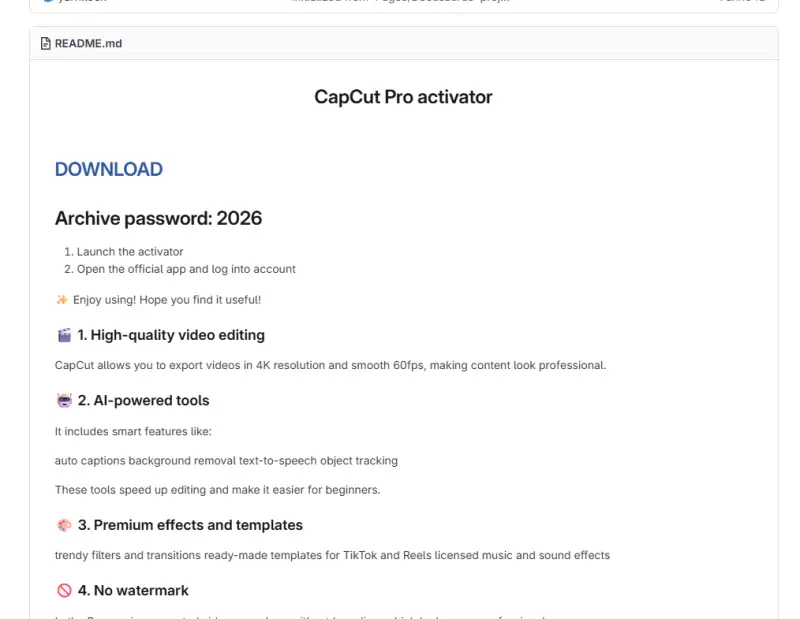
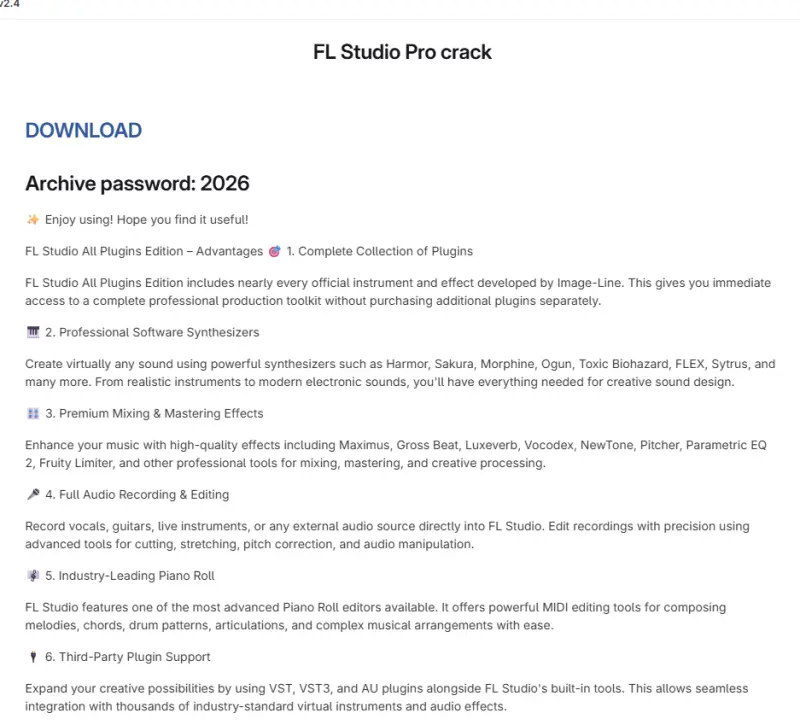
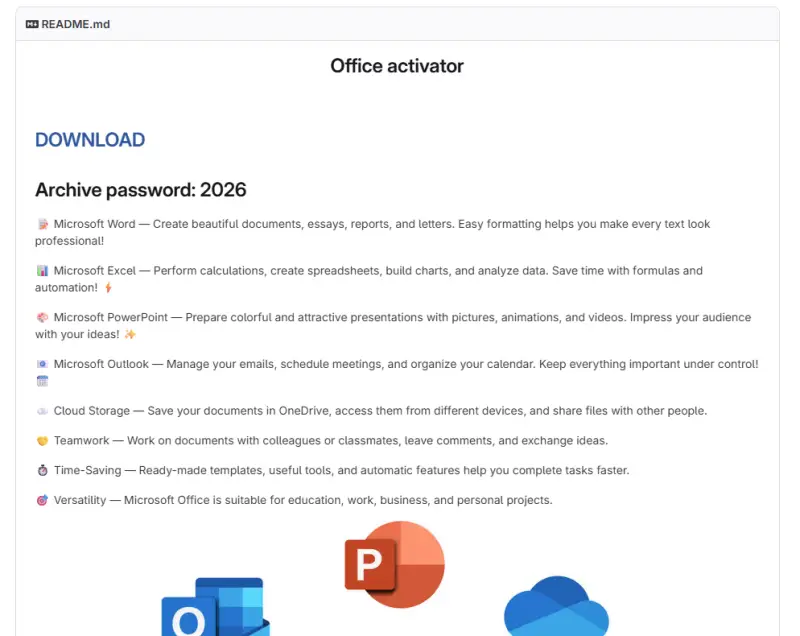
The lures rely on files people may be inclined to open or run: ZIP archives presented as notices about alleged copying or other complaints, and software activators advertised as cracks. One set of activators was hosted on GitLab. Other ZIP files appeared through Google Sites or arrived after a PDF directed the recipient to download an archive.
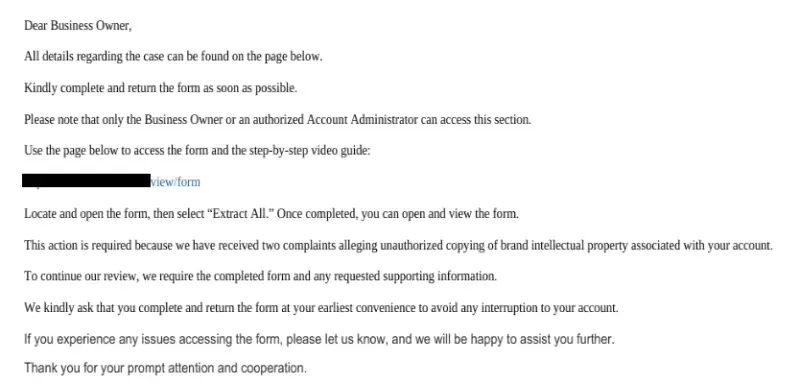
After a victim runs an executable from one of these archives, the program can open a convincing but fake document while the infection proceeds in the background. In one example, the archive used a modified WindowsCodecs.dll to decrypt OXLoader. Other samples used different DLLs, showing that the attackers can adapt the file package to the executable they choose.

Some deliveries use batch files instead of a bundle of executable and DLL files. The scripts retrieve another ZIP archive from a hosting service, with long filenames such as Photo_{RANDOM NUMBERS}_Product_Review_Order_Front_Back_PDF.bat and Case_Form_Video_{RANDOM NUMBERS}_Review_Front_Back_{RANDOM_NUMBERS}_Review_Front_Back.bat. The long names imitate document-related material and can make the files harder to assess at a glance.
Other archives carry names such as Evidence_of_Violation.zip. Inside, a copy of WinWord.exe may have a double extension, for example evidence_of_violation.docx.exe. The extension at the end identifies an executable, even when the earlier part of the filename suggests a document. In these cases, the malicious msvcr100.dll helps launch OXLoader.

GitLab-hosted activators follow the same broad pattern: software that appears to unlock a paid product is used to start the infection. This is a practical reminder that an apparently functional installer or activator can be a delivery wrapper for several hidden stages.
DLL hijacking and the first execution stages
DLL hijacking works by placing a malicious library where a legitimate program will load it. The program may start normally, but the substituted library runs attacker-controlled code as part of that process. Researchers identified OXLoader decryption through several DLLs, including Qt5Widgets.dll, Qt6Core.dll, SDL3.dll, UnityPlayer.dll, ANCUtility.dll, dbghelp.dll and msvcr100.dll. The paired executables were associated with Microsoft applications, Steam, OBS Studio, and PDF or Word readers.
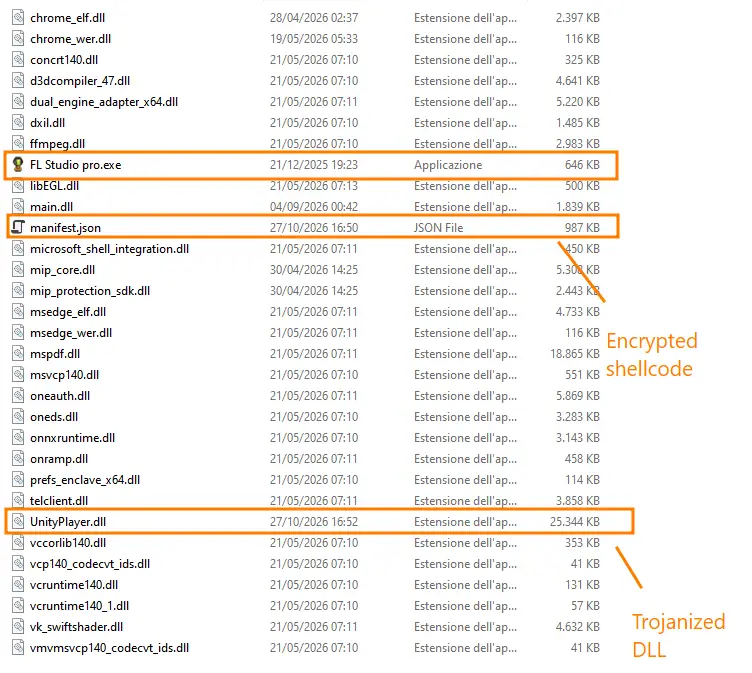
In the GitLab sample, the archive included legitimate DLLs and an executable associated with Take-Two Interactive Software. The executable loaded a trojanized UnityPlayer.dll. Its accompanying manifest.json held encrypted shellcode, which was later decrypted and injected into another DLL.
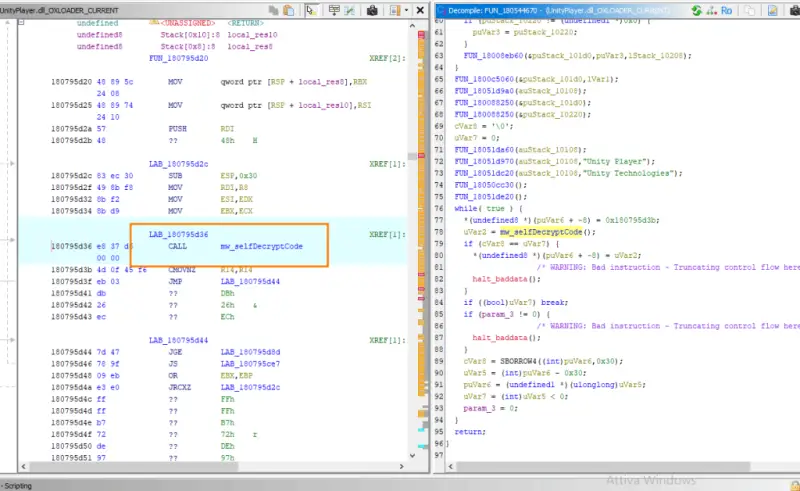
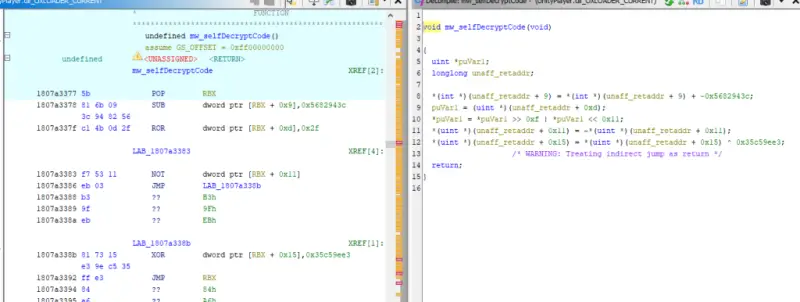
One DLL begins execution with a jump instruction that leads to the decryption routine. The code varies between samples and is heavily obscured with opaque predicates, flattened control flow and mixed Boolean arithmetic. Researchers used the Sogen emulator to trace execution and identify anti-analysis and language checks. One sample also tested virtualized environments through WNetGetResourceParentW.
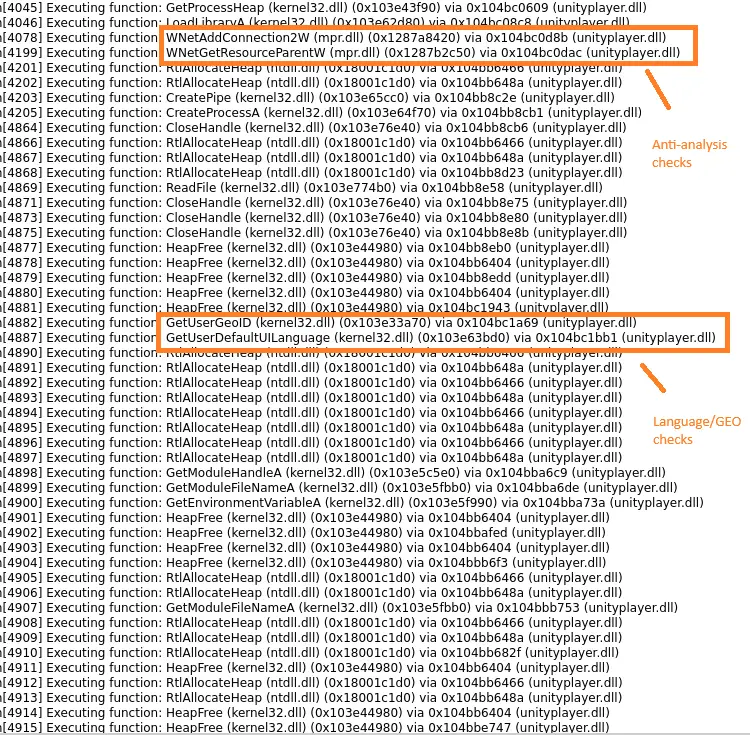
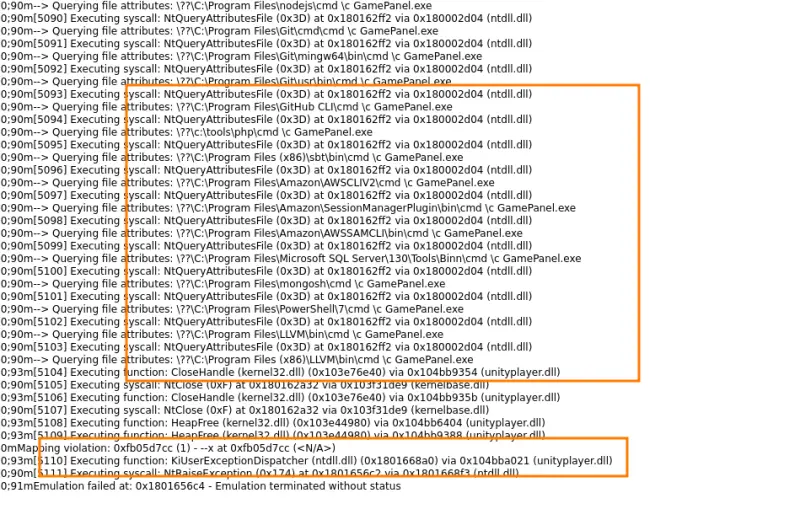
Other checks look at processor count, display refresh rate, geographic location and the Windows interface language. The sample checks for at least three processors and a refresh rate of 20 Hz or higher; it also compares location and language values against a list that includes Russia and several nearby countries. These checks can prevent execution in some analysis setups. If they detect an environment the malware avoids, the sample may shut down the system or jump to an invalid address.
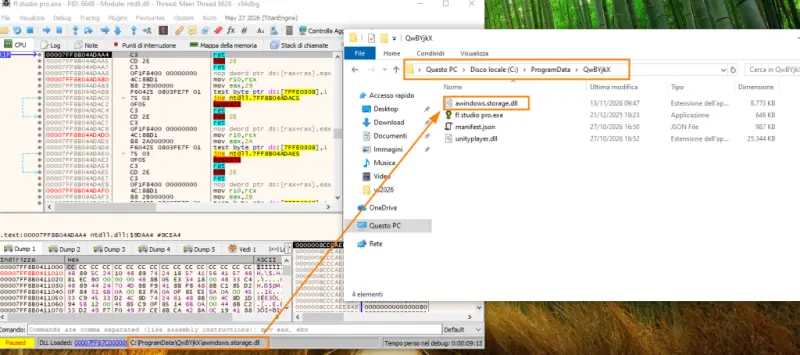
Once past these checks, the malware copies files into a randomly named directory under ProgramData and adds a RunOnce registry value to launch its main executable. In the observed sample, that directory held the executable, unityplayer.dll, manifest.json and awindows.storage.dll.
From encrypted shellcode to payload
The next stage uses awindows.storage.dll to inject shellcode. On disk, the DLL contains an additional .text section that retains the original signature. After the DLL loads into memory, the section is replaced with shellcode decrypted from manifest.json. This arrangement differs from an earlier analysis by Elastic, which found the shellcode in the .reloc section.
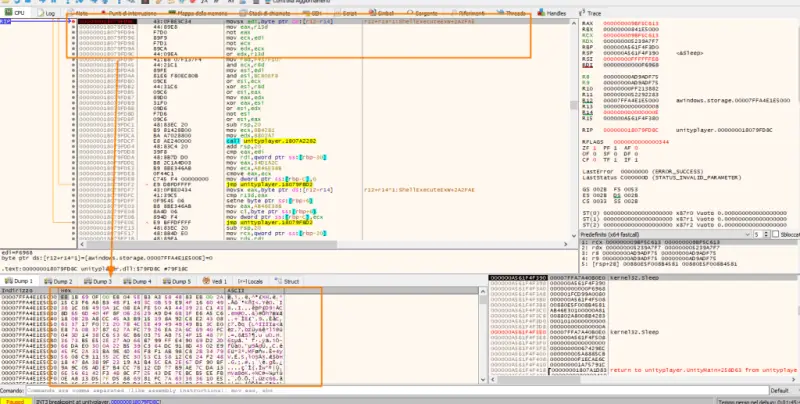
manifest.json is decrypted before executionThe shellcode runs and decrypts itself through several XOR operations. Other injection libraries found in related samples include windows.StateRepository.dll, wmp.dll, mshtml.dll and ieframe.dll. The encrypted data file can also use names such as Dependencies.manifest or titles.png, so defenders looking only for one filename may miss a variant.
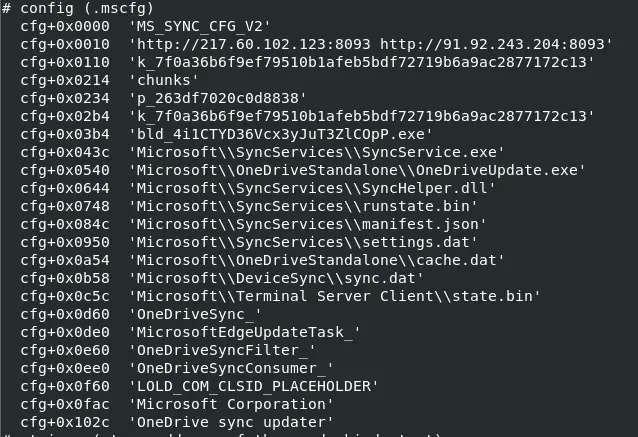
After decryption, Donut Loader runs a DLL compressed with APLib. It then starts an obfuscated PE file that loads another stage into its own process memory. That stage is a downloader associated with LOLD; its strings and configuration are decrypted using a custom SplitMix64 XOR method, and the configuration sits in a custom .mscfg section. The code contains references to injection techniques, including GhostedHollowing.
At the time of analysis, LOLD’s command servers were offline. Related activity included HTTP paths for retrieving chunks and modules, reporting client status and accessing files. The researchers associated the observed requests and analyzed artifacts with Hermes as well. The overlap underscores a complication for defenders: OXLoader’s delivery chain can lead to different families, and infrastructure or payload availability may change over time.
What defenders can watch for
Suspicious archives deserve extra scrutiny when they ask the recipient to run a program in response to a complaint, or when they contain executables with unusually long names and document-like double extensions. Missing files after archive extraction are another signal to investigate, since some contents may be hidden or handled by an unexpected process. Cracked activators carry a similar risk because the apparent utility can conceal a loader and several follow-on components.
For technical teams, the useful detection opportunity is the chain: an unexpected executable loading a DLL from its own directory, obfuscated code decrypting data from a manifest-like file, and persistence through a RunOnce value. The specific DLL, filename and final payload can vary, so monitoring the sequence of behavior offers a more durable lead than relying on one sample name. OXLoader’s layered design makes those execution relationships the key details to track as new variants appear.