Google’s “My Channel” Patent Imagines TV Shows Built Around Each Viewer
- Robert Martinez
- 510 reads
Google’s patent sketches AI shows tailored to a viewer’s habits, face and voice. The idea remains unannounced, with privacy and production questions unresolved.


Google has described a TV concept that would turn a viewer from an audience member into a show’s lead character. Called “My Channel,” the idea uses viewing habits to guide AI-generated videos and could, in one version, put the viewer’s likeness and voice into the story. It’s a striking extension of personalized recommendations: instead of choosing what to watch, a person might ask a system to make something for them.
The concept appears in a Google patent application published Nov. 19. Records show the company filed it on May 13, 2025. A patent application describes a possible design; it doesn’t establish that Google is building or plans to release the feature. The company has not announced a product called My Channel.
AI-generated video is already showing up in social feeds, advertising and films on free streaming services. Google introduced its Veo 3 video model in March 2025. My Channel’s proposed twist is to connect video generation to a familiar TV interface and a viewer’s own preferences, potentially creating a personalized stream of stories rather than a single generated clip.
A channel assembled around viewing habits
An illustration in the application shows a TV menu labeled “John’s Channel,” with options including a romantic comedy, a science-fiction adventure and an action thriller. One sample instruction asks the AI to create a video in which “the user will play the protagonist.” The system could make a video when requested or prepare new ones on a schedule, such as weekly or monthly.
The examples suggest that the system would use viewing history to shape both the subject and the viewer’s role. If someone regularly watches clips about a cricket player, for instance, the AI might create a scene featuring that player or place the viewer among fans cheering for India. That’s more specific than a recommendation engine surfacing another sports video: the proposed system would generate a new scenario around the viewer’s interests.
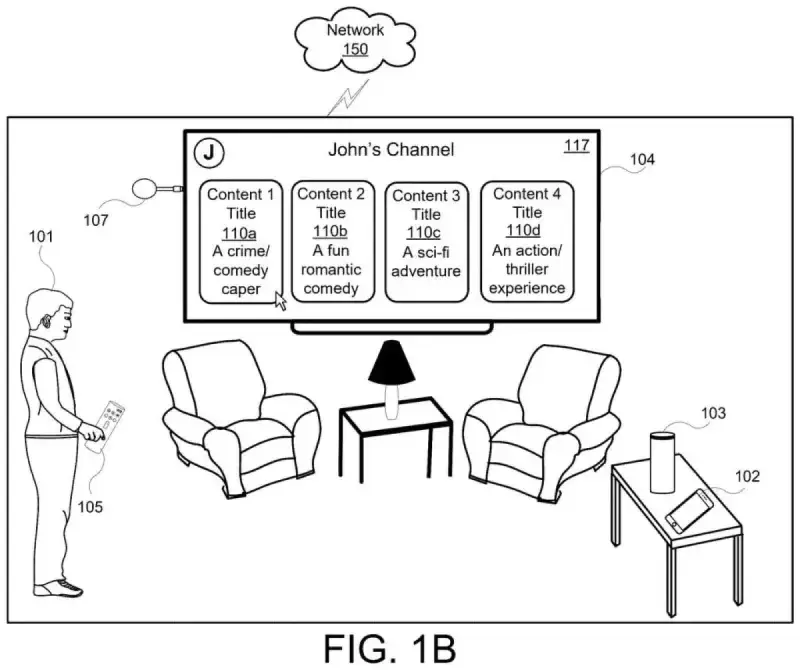
To decide what to generate, the system could consider which titles and genres someone watches, along with how long they spend watching. The application also lists age group, device language and location as possible inputs. Those signals would inform instructions for the AI, such as what kind of story to produce. The document doesn’t specify how much control viewers would have over the resulting stories or how often the system would need to generate new material to keep a channel feeling fresh.
There’s a business component, too: the design includes an “advertising stitcher” that would insert ads into a completed video before playback. That points to an ad-supported model, though the application doesn’t describe ad selection, frequency or whether viewers could pay to avoid interruptions. Google already offers ad-supported channels through Google TV Freeplay. Google Photos also turns a picture a person selects into a short video. My Channel would combine elements of those existing experiences with personalized, AI-generated programming.
The viewer becomes part of the production
Putting someone on screen requires more than knowing their favorite genre. The application describes creating a digital likeness from photos or videos. It also outlines a way for a TV assistant to send audio from voice commands to a server, where the audio could be stored in association with the user. The system could then synthesize that person’s voice for a protagonist’s dialogue.
That design raises a practical question about consent and control. The filing says viewers may have a say in what information is collected and how it is used, but it doesn’t settle whether people could keep using voice commands while preventing those recordings from contributing to a generated show. Nor does it explain how a person would review, change or remove a likeness once the system had created one. Those choices matter because viewing history, images and voice recordings each reveal different kinds of personal information.
The concept also leaves basic product questions open. The application offers examples of generated genres and viewing patterns, but no details about video quality, generation time, device requirements or how the system would handle a request that combines several preferences. For viewers, the appeal would depend on whether the finished stories feel tailored without becoming repetitive. For Google, the workload of making videos for individuals, alongside inserting ads, would shape how such a service could operate.
Patentlyze, a patent-tracking site, spotted the application and reported that a patent examiner had rejected it for reasons that were not specified. Google could revise its claims or continue pursuing them. That process says little by itself about whether the company will turn the idea into a product. For now, My Channel is a design on paper; the next useful signal would be a working feature that clarifies how people control their data, their likeness and the stories made in their name.