Java4Shell Java Flaw: Why Exposure Depends on CPU and Application
- James Miller
- 889 reads
Java4Shell can corrupt memory and enable code execution in some services, but exposure depends on the processor, Java version and application.

Java4Shell is a serious Java flaw with a narrow path to exploitation. It can corrupt memory and, under specific conditions, let an attacker run code through a vulnerable service. The practical concern is greatest for organizations running Java applications on certain newer x86-64 processors; most home computers are unlikely to expose the kind of internet-facing service the flaw needs.

Oracle and the OpenJDK project released fixes on November 17 for CVE-2026-114938, a bug in Java’s Base64 decoder. Security firm Calif found the flaw and named it Java4Shell. Its name may invite comparisons with earlier Java vulnerabilities, but the conditions described so far point to a more constrained problem: the processor, Java runtime, input route and application all matter.
What the flaw does
Base64 turns binary data into text so it can travel through systems designed to handle text. Java applications use it in places such as login flows, file uploads and network messages. When an application decodes incoming data, OpenJDK can use processor-specific instructions to speed up the work.
Java4Shell sits in the hand-written assembly code behind that faster decoding path. A malformed, short input can make the code write 62 bytes beyond the end of a memory buffer. That is a memory-corruption bug: data lands outside the space reserved for it. Depending on the surrounding memory and the application’s behavior, such a mistake may cause a crash or help an attacker change how a program runs.
Memory corruption does not automatically mean remote code execution. Turning it into code execution requires a chain of conditions, and Calif says the chain has to be built for the target application. That distinction explains why the flaw can carry a high severity rating while still affecting a comparatively limited set of deployments.
Where exposure exists
The processor requirement is specific. The affected fast path applies to x86-64 CPUs that support AVX-512 VBMI. Calif names Intel Xeon processors from Ice Lake onward and AMD Zen 4 or newer as examples. ARM64 processors aren’t affected.
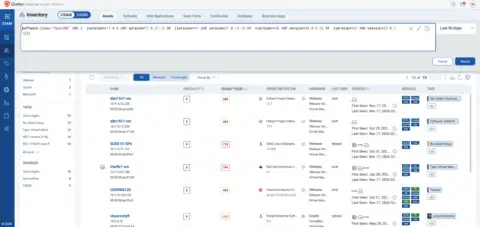
The Java version matters too. The flaw affects OpenJDK from version 17.0.6 onward, along with distributions built from that code. Organizations therefore need to check both the runtime version and the processor used by each service. A fleet may contain different combinations, so a single inventory entry such as “runs Java” won’t establish whether a particular application is exposed.
Finally, an affected application needs to pass attacker-controlled data to the vulnerable decoder. Oracle says exploitation requires supplying data to the affected APIs, for example through a web service. The flaw can’t be triggered through untrusted Java Web Start applications or applets.
Calif demonstrated code execution without logging in on default installations of Keycloak, Jira, Confluence, Artifactory, Jenkins and PingFederate. In Kafka, Solr, Elasticsearch, Gerrit and Spinnaker, its demonstrations required a user to log in first. These results show that well-known server products can contain a route to the decoder; they don’t establish that every installation of those products is exposed in the same way.
Severity and practical response
The published scores differ. Oracle rates the flaw 8.1 under CVSS 3.1 and calls it difficult to exploit. Calif assigns it 9.2 under CVSS 4.0. Those figures use different versions of the scoring system and come from organizations assessing the same underlying bug. For operators, the score is a signal to investigate; exposure depends on the actual runtime, processor and data path.
At the time of the reports, there were no known cases of the flaw being used in the wild. That doesn’t remove the need to patch: Calif’s demonstrations show plausible routes to code execution, and application-specific exploitation could become easier as researchers examine the bug. Oracle’s description of the flaw as difficult to exploit also shouldn’t be read as a guarantee that a particular deployment is safe.
Teams should identify Java services running on affected processors, determine whether they decode input that an outside party can supply, and apply the available Java updates. Where an update can’t be applied immediately, reviewing which services accept Base64 data can help prioritize remediation. An ordinary home PC rarely runs an internet-facing Java service that processes such input, which is why the issue is more likely to demand attention from organizations operating Java infrastructure than from typical home users.
The next useful signal will be whether researchers find repeatable exploitation paths across more applications, or whether the heap layout and data flow keep each chain specific to its target. For now, Java4Shell calls for focused inventory and prompt patching wherever the required conditions meet.