Amazon Remote Assistant Job Offers Raise Reshipping and Data Risks
- Thomas Williams
- 521 reads
Sites promising up to $5,000 a month use Amazon-like names, but application questions point to package handling and the forms collect sensitive details.
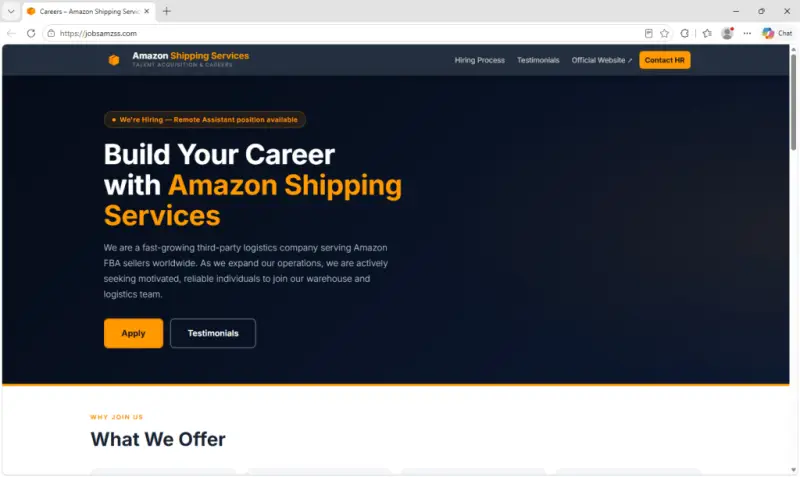
The warning sign in these supposed Amazon remote assistant jobs isn’t just the promise of earning up to $5,000 a month. It’s the mismatch between the advertised work and the application: a role described as fully remote asks whether applicants have a car and someone at home to receive parcels. That combination points toward package handling, not ordinary assistant work.
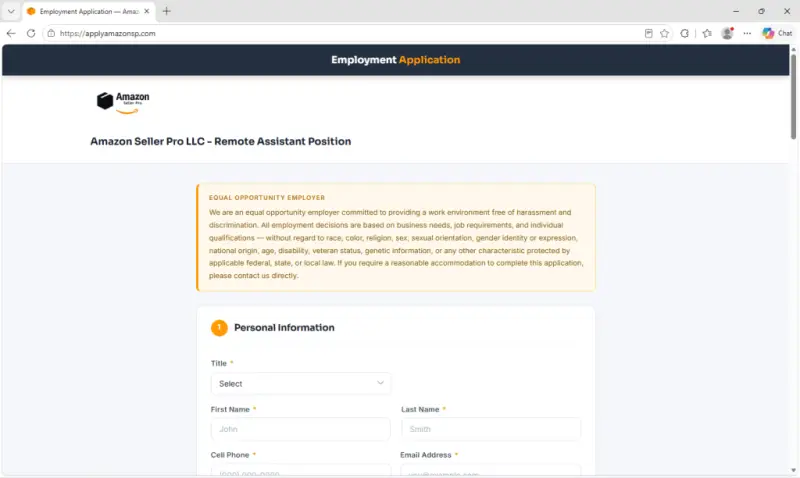
The offers appeared on several websites using names and branding that resemble Amazon or businesses serving Amazon sellers. None is run by Amazon, and the roles are separate from the company’s announced plan to hire more than 300,000 seasonal workers in the US. Amazon says its job openings are listed at amazon.jobs; hourly warehouse roles are also posted at hiring.amazon.com.
The application tells a different story
One careers page describes the job as a “legitimate, fully remote position,” with no commute, office or fixed desk. But its application asks whether applicants have reliable access to a personal vehicle, and what arrangements they have for transporting packages if they don’t. It also asks whether someone can receive parcels when the applicant is away.
Those questions fit a reshipping setup: a person receives goods at home, then sends them elsewhere. A job seeker may think they’re applying for flexible online work, while the actual tasks involve moving parcels. The goods could have been purchased with stolen payment details, leaving the person recruited to handle shipments connected to fraud.
The offer also asks for personal information before explaining who will receive it. Its form requests an applicant’s name, phone number, email, home address, education and employment history, and felony history. It says the data is secure, but submissions go through Formspree, a third-party form service. The site doesn’t establish who gets the information, and it tells search engines not to index the page.
Several domains, a similar pitch
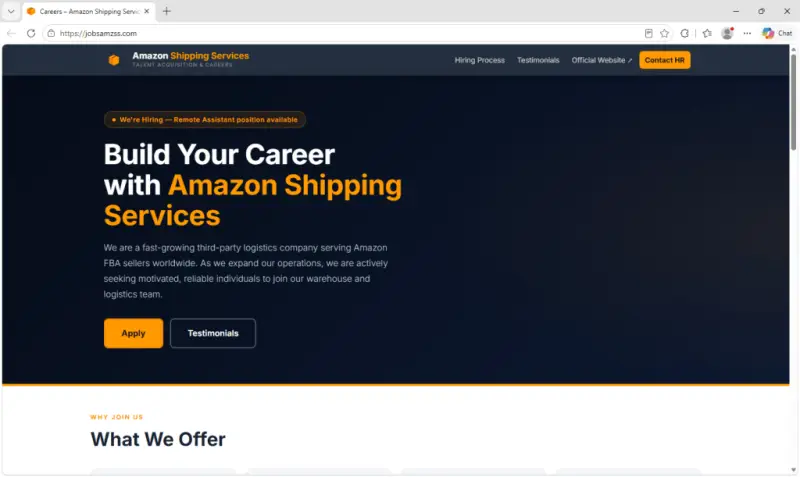
The remote assistant listing appears on amzssapplication[.]com and jobsamzss[.]com. A related application page, applyamazonsp[.]com, uses the name “Amazon Seller Pro LLC.” The pages share identical site icons, and their domains were registered through the same registrar between July 23 and October 26. Those details suggest a connection among the sites, though they don’t identify who operates them.
The careers pages also list HR email addresses on amzncrew[.]com, joinamzn[.]com and workatamzn[.]com. An email address or Amazon-like domain doesn’t establish a relationship with Amazon. The recruitment pages link to amzshippings[.]com, which advertises preparation and shipping services for Amazon sellers. That domain was recently registered and its ownership details are hidden.
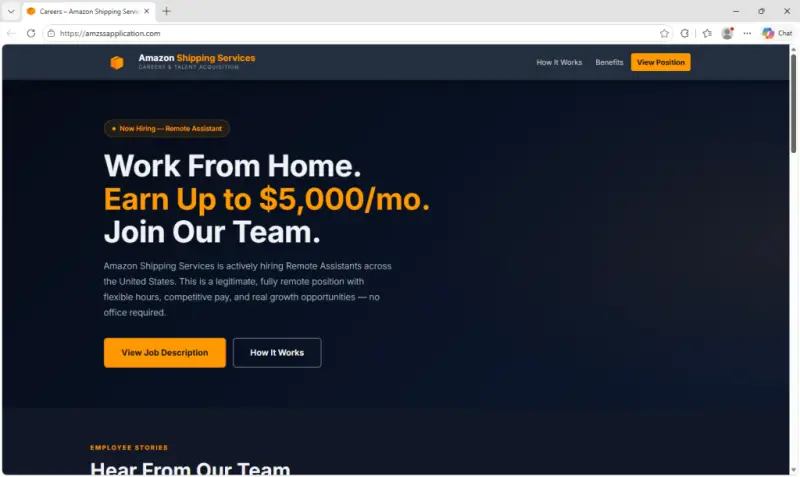
The companies’ names may sound plausible because independent businesses do serve Amazon sellers. Those businesses can recruit on their own, but applicants need to verify the employer separately. Start by checking whether the role appears on Amazon’s job boards. For a separate business, find contact details independently and confirm the opening with that company.
Why the pitch can work
Amazon’s seasonal hiring plans make a new “Amazon is hiring” message feel credible. The offer also targets people who want flexible hours or work from home, including parents, students and people seeking a second job. Familiar branding and a polished form can lend a false sense of legitimacy, especially when the job promises a high monthly income without describing a clear work process.
This approach has appeared in other forms. Amazon reported more complaints about people posing as recruiters in September and October 2025. In June, job seekers were warned about text messages offering $250 to $500 a day for 60 to 90 minutes of work. The sites in this case add careers pages, a company website and an application form to make the pitch look more established.
There are signs the pages may have been assembled from a template. One tells applicants that HR will call directly and that calls aren’t scheduled in advance.
What applicants risk
Providing a name, phone number and home address can create opportunities for identity theft or targeted follow-up. Be cautious if someone who contacts you later asks for a Social Security number, bank details or photos of identity documents. An unsolicited call that claims to be an interview doesn’t confirm that the job is genuine.
Taking the role could bring different risks. If you’re asked to receive and forward parcels, your address may become part of a chain involving goods bought with stolen payment details. A supposed employer may also send a check and ask you to return part of the money or use it to buy supplies. The check could later bounce after you’ve sent money onward.
Verify before sharing details
- Look for Amazon roles on amazon.jobs or hiring.amazon.com.
- Inspect the domain itself. Logos, colors and familiar words are easy to copy.
- Treat unusually high pay for little work, no résumé requirement and an unscheduled call as reasons to check the employer carefully.
- Don’t receive or forward packages for a business you haven’t verified, and don’t send identity documents, sensitive account details or money before confirming the offer.
If you’ve already applied, don’t give an unexpected caller your bank details, identity documents or money. If you shared sensitive information, IdentityTheft.gov provides steps to respond, and you can consider placing a credit freeze.
The practical test is whether the work described in the application matches the job listing, and whether the employer can be confirmed through contact details you found independently. A remote assistant role that hinges on cars and doorstep deliveries deserves careful scrutiny before you share personal information or agree to move a package.