Claude Fable 5.2 Draws a Python Reading a Book in 2,214 Turtle Commands
- Thomas Jones
- 572 reads
In five informal Python tasks, Claude Fable 5.2 drew a book-reading snake and scored well on modern idioms, while taking 8 minutes 32 seconds.

Claude Fable 5.2 produced a detailed turtle drawing of a python reading a book, using 2,214 drawing commands across 260 lines of code. The image is a useful demonstration of how a model handles a visual task through ordinary Python instructions: the program has to translate a prompt into a sequence of movements and marks, and the final picture depends on what those commands actually draw.
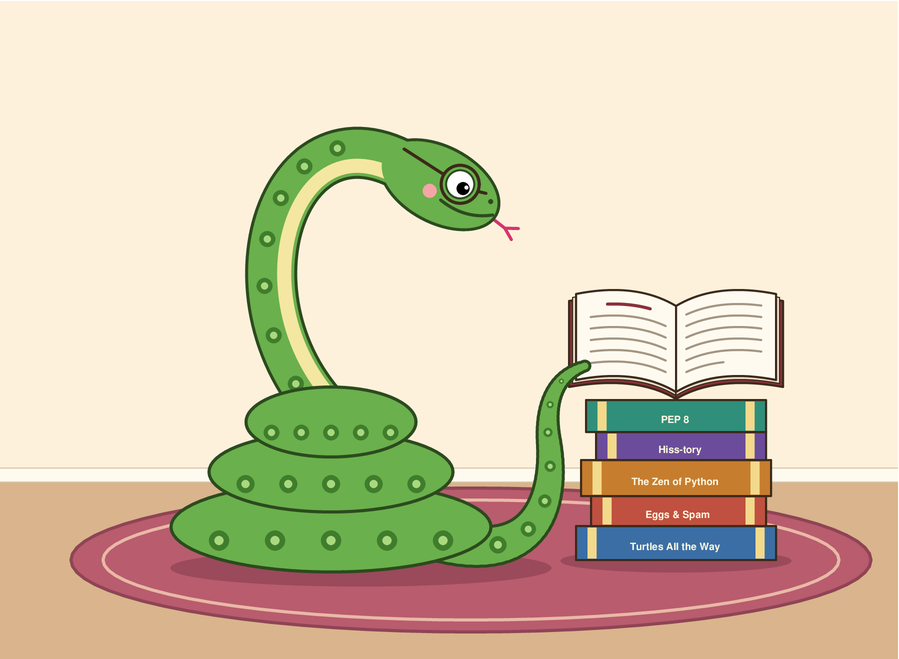

The drawing was one of five tasks in an informal comparison of models doing everyday Python work. Each model received the same prompts, without a system prompt. For the turtle task, the program ran under a virtual display, and the evaluators recorded its drawing commands. That makes the result concrete: the picture reflects the code the model returned, including any stray marks, rather than an image generated by a separate drawing system.
What the five tasks reveal
The exercise looked beyond whether a model could produce a plausible picture. It also checked whether its Python code used current language features and common idioms, whether it could answer a version question, and whether it would stay focused when asked to edit an existing script.
On the Python-version check, Fable 5.2 used features as new as Python 3.14, associated with a 2025 release, and no strong checkpoint came out stale. It used 13 of the 14 modern idioms that applied to its code. Asked which Python release was newest, it answered 3.14. That answer shows what it reported for this prompt; it doesn’t establish the model’s training cutoff or guarantee that every answer about Python versions will be current.
The edit task tested restraint. The model had to add an --ext option to a 50-line script that contained ten unrelated spots that could be tidied, including an unused import, percent formatting, and a comment typo. Fable changed none of those ten spots. For teams reviewing generated patches, that result is relevant: extra cleanup can make a small requested change harder to review. Here, the model kept the edits within the stated task.
Another prompt asked how to use itertools.flatten(), a function that doesn’t exist. Fable identified that and offered a real alternative instead of inventing an API. This is a useful distinction in practical Python work: a confident example built around a nonexistent function can waste debugging time, while a direct correction gives the developer a workable route.
Useful signals, with limits
These checks offer a compact view of habits that can affect day-to-day coding: choosing current syntax, avoiding unrelated edits, and responding accurately when a prompt contains a false premise. They don’t establish how the model performs across a large codebase, a longer debugging session, or a wider range of Python projects. The drawing task is similarly narrow. A successful picture shows that the returned turtle program completed this particular prompt; it doesn’t measure code quality across other kinds of work.
Time and cost add a practical dimension. Across all five tasks, the API reported a charge of $1.97. The run used the default reasoning setting, with 38.9 thousand thinking tokens reported across the tasks. It took 8 minutes and 32 seconds and produced 49.1 thousand output tokens. Those figures describe this run as a whole, so they don’t isolate the cost or latency of drawing the snake. For a practitioner weighing model use, the overall time is also a reminder that strong task results can come with a noticeable wait.
The comparison’s Python feature score uses checkpoints and is shown alongside the relevant version’s release year. A model can use newer features and still earn a lower score, so the headline version number alone doesn’t capture how consistently its code meets the checks.
What to watch next
Fable 5.2’s strongest signals here are its modern idiom score, its focused edit, and its refusal to make up a standard-library function. The turtle image adds a visible result, backed by a substantial generated script. For teams, the practical takeaway is to judge these behaviors separately: a model can write current Python and follow a narrow instruction, while response time and performance on broader tasks still need their own evaluation. Further comparisons across varied prompts would show whether these habits hold beyond this five-task sample.


