Meta Muse in Python: Comparing Spark API Costs and Glimmer’s Open Weights
- David Brown
- 635 reads
Muse Spark works with the OpenAI Python client; Glimmer offers a self-hosted option. Cost, latency and product access differ.
Meta’s Muse developer models are straightforward to call from Python: Muse Spark’s API follows the OpenAI request format, so existing client code needs few changes. The harder choice is which model and access path fit the work. Spark is a hosted reasoning model with usage-based pricing; Glimmer is an open-weight model that can run on your own hardware or through a hosting provider.
That distinction matters because “Muse” also names Meta’s consumer AI agent and an announced device. Those products don’t share the developer models’ API access. For Python work, the relevant choices are the Model API for hosted models and Glimmer’s downloadable weights.
Choose between hosted Spark and open Glimmer
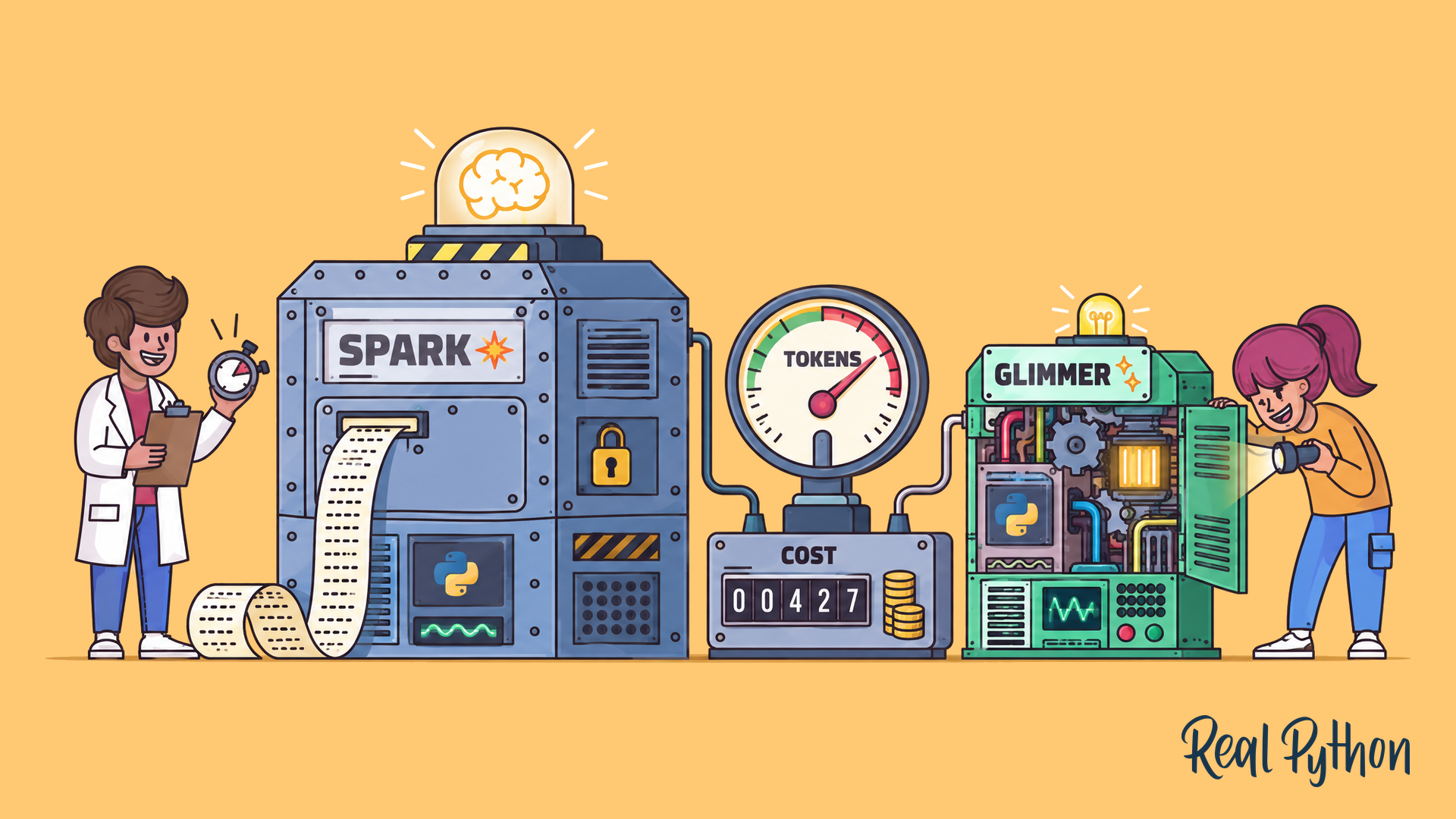
Muse Spark is available through Meta’s Model API and OpenRouter. Both charge the same token prices, according to the source. Spark 1.3 costs $1.25 per million input tokens and $4.25 per million output tokens. Its weights are closed, and the API requires a key and usage-based billing.
Muse Glimmer is a 30-billion-parameter model released under Apache 2.0. Developers can download its weights and host it themselves, or pay a provider to serve it. Hosted pricing starts at $0.30 per million input tokens and $1.10 per million output tokens. In the reported test, Glimmer answered the same question for about one-eighth the cost of Spark. That result is a useful data point, not a universal cost ratio: actual spending depends on the prompts, outputs and provider.
The license and deployment model make Glimmer the more flexible choice for teams that want control over hosting or need commercial use. Self-hosting still means supplying suitable hardware and operating the model infrastructure. Spark avoids that work, while charging for each request.
Meta’s other developer offerings include Muse Wonder 1.0 in preview at $4 per million input tokens and $20 per million output tokens; Muse Ember 1.0 at $0.10 and $0.50 for requests up to 200,000 tokens; Muse Image at $0.01 per image; and Muse Voice Transcribe at $0.18 per hour of audio. Muse Code is a command-line tool, with API rates or plans starting at $5 per month. The source lists Spark as having a one-million-token context window, a notable fit for applications that need to provide long inputs.
What Python developers can do with Spark
Since Spark follows the OpenAI protocol, developers can use the openai Python package and adapt the client configuration to the Meta endpoint. The same request style supports text, images, tool calls and structured output. That means teams can try Spark within familiar application patterns instead of building a new integration layer for each capability.
The tutorial’s practical checks cover streaming a conversation, sending an image, invoking a tool and parsing typed output. These examples matter because protocol compatibility is most useful when it reaches beyond a basic text prompt. Tool calls let an application hand a model a defined function to request; structured output makes it possible to ask for data in a form the application can parse.
Spark’s reasoning is always enabled, but the effort setting can be lowered. In the reported test, setting effort to "minimal" cut latency by more than half and cost by about 60 percent without reducing accuracy on that test. That’s a substantial tuning option for interactive applications, though the result doesn’t establish that minimal effort will preserve accuracy across different tasks. Teams should compare settings against their own workloads.
Keep the product names straight
The consumer Muse agent is a separate product. Meta introduced it on September 8, 2026, describing it as an assistant that can proactively help with goals and suggest ideas. It’s available through iOS and Android apps, the web, WhatsApp and a Mac desktop app, and is limited to the United States. The agent can send email, book travel and shop through connectors such as Instacart. It has a free tier with a weekly usage limit, plus Power at $20 per month and Maximum at $100 per month.
There’s no public API for calling that agent with a key. Developers seeking to connect services to other users’ Muse agents can submit an existing MCP server or API to Meta’s Connector Platform for review. A paid agent plan also shouldn’t be assumed to cover Model API calls: Meta’s developer documentation doesn’t describe the plans as including API usage.
Muse Charm is a separate, unreleased gadget announced at Connect on September 23, 2026. Meta hasn’t provided a price or final specifications. Reports describe a keychain-sized device with a two-inch touchscreen and 5G, but accounts differ on whether it includes a camera, so those details remain provisional.
Hardware access through Muse Gadgets
For developers building their own hardware, Meta released the Muse Gadget SDK under Apache 2.0 on October 2, 2026. It includes firmware for ESP32 boards and a Linux SDK for devices such as Raspberry Pi. The Python package, musegadget, requires Python 3.9 or later and is installed through the repository’s install.sh script rather than PyPI.
After pairing a device with an SDK token and enabling Developer mode in the Muse app, Muse can run commands on that machine. Developers can add commands in Python, and local scripts can send messages into their Muse chat with musegadget send-user-msg. This connects personal hardware to the consumer agent, but it doesn’t create a general API for calling other people’s agents.
For most Python teams, the first decision is practical: use Spark when hosted reasoning and familiar API calls matter, or evaluate Glimmer when open weights, licensing and deployment control are priorities. Measure latency and quality on representative tasks before settling on Spark’s reasoning effort or a hosted versus self-managed Glimmer setup.