Claude Fable 5.2 Cuts API Costs as Google Opens Gemini 4 Carbon to Developers
- James Smith
- 364 reads
Anthropic says its latest Claude models reply faster and use fewer tokens per task. Google has also opened its Gemini 4 Carbon model to programmers.
Lower prices and faster replies could change the economics of using top tier AI models, but the headline rates only tell part of the story. Anthropic has introduced Claude Fable 5.2 and Claude Mythos 5.2, while Google has opened Gemini 4 Carbon to programmers. For teams choosing a model, the practical questions are how much a completed task costs, how quickly it finishes, and which users can access it.
Anthropic pairs a shared model with different safeguards
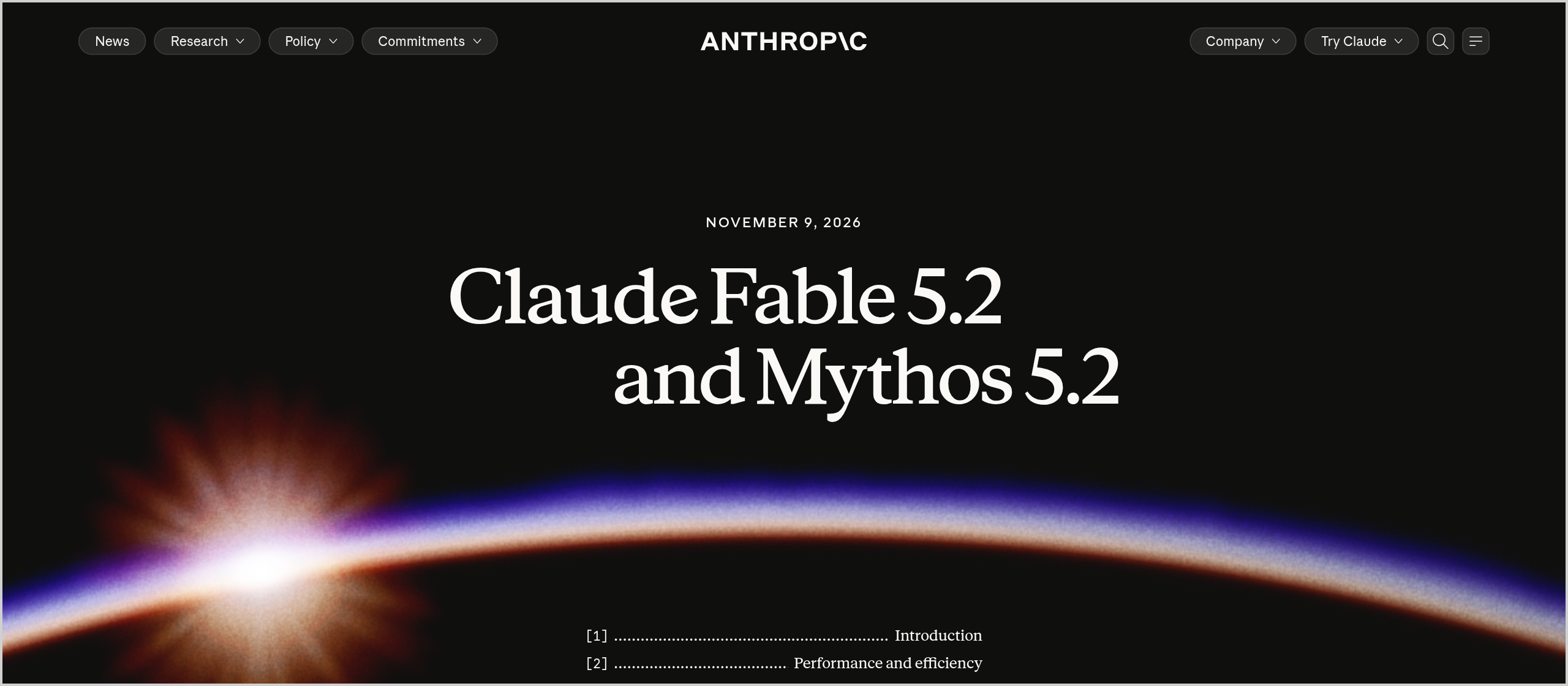
Fable 5.2 and Mythos 5.2 are Anthropic’s latest versions of its most capable Claude models. The company says both use the same underlying model, but differ in their safeguards. Fable has stronger protections around cybersecurity and biology and is available for general use. Mythos has fewer such safeguards and is restricted to organizations Anthropic has vetted.
That distinction makes access part of the product design. Teams using Fable can evaluate the model through the standard channels available to them, while Mythos is aimed at a narrower group of organizations. Anthropic hasn’t supplied details here about the vetting process or which capabilities differ in day to day use. For developers, those unanswered questions matter when deciding whether a model fits a particular workflow.
Token prices are lower, but task costs still depend on usage
Developers can connect their software to Claude through an API and pay according to how much text they send and receive. Anthropic lists a price of $8 per million input tokens and $40 per million output tokens. A token is a small unit of text; the number used depends on the text being processed and generated.
Anthropic says replies from the new models arrive up to 30 percent faster than replies from version 5.1. There’s also an optional fast mode, priced at twice the standard rate: $16 per million input tokens and $80 per million output tokens. The company says this mode can produce output up to 2.5 times faster.

Those figures describe rates and claimed speed, not the total cost or completion time for a particular application. A model that reasons through a task at greater length, or returns a longer response, consumes more tokens. So a lower price per token can still result in a costly job if the model uses many more tokens to finish it.
Anthropic says Fable 5.2 uses fewer tokens per task than version 5.1 at its default setting. That could reduce costs in workloads where the newer model reaches a useful answer with less processing. But the result will depend on the prompts, output requirements, and task mix each team uses. A small trial using representative work is a better guide to spending than multiplying the listed rates by an assumed token count.
A hardware engineering result offers a separate signal
Anthropic reports that Fable 5.2 scored 83.5 on BenchCAD 2.1 at its highest effort setting, compared with 44.4 for Fable 5.1. BenchCAD 2.1 is described as a hardware engineering test. The result points to a large improvement on that evaluation, but it comes from Anthropic’s own measurement. It doesn’t establish how the model will perform across all hardware design tasks, or how its score relates to the time and cost of completing real work.
For practitioners, the most useful follow up is to compare model output against work that can be checked independently: whether a proposed design meets requirements, whether revisions are correct, and how much review is needed. A benchmark can help identify a model worth evaluating, while hands on trials show whether its strengths match a team’s workload.
Google’s model adds another option, with fewer details available
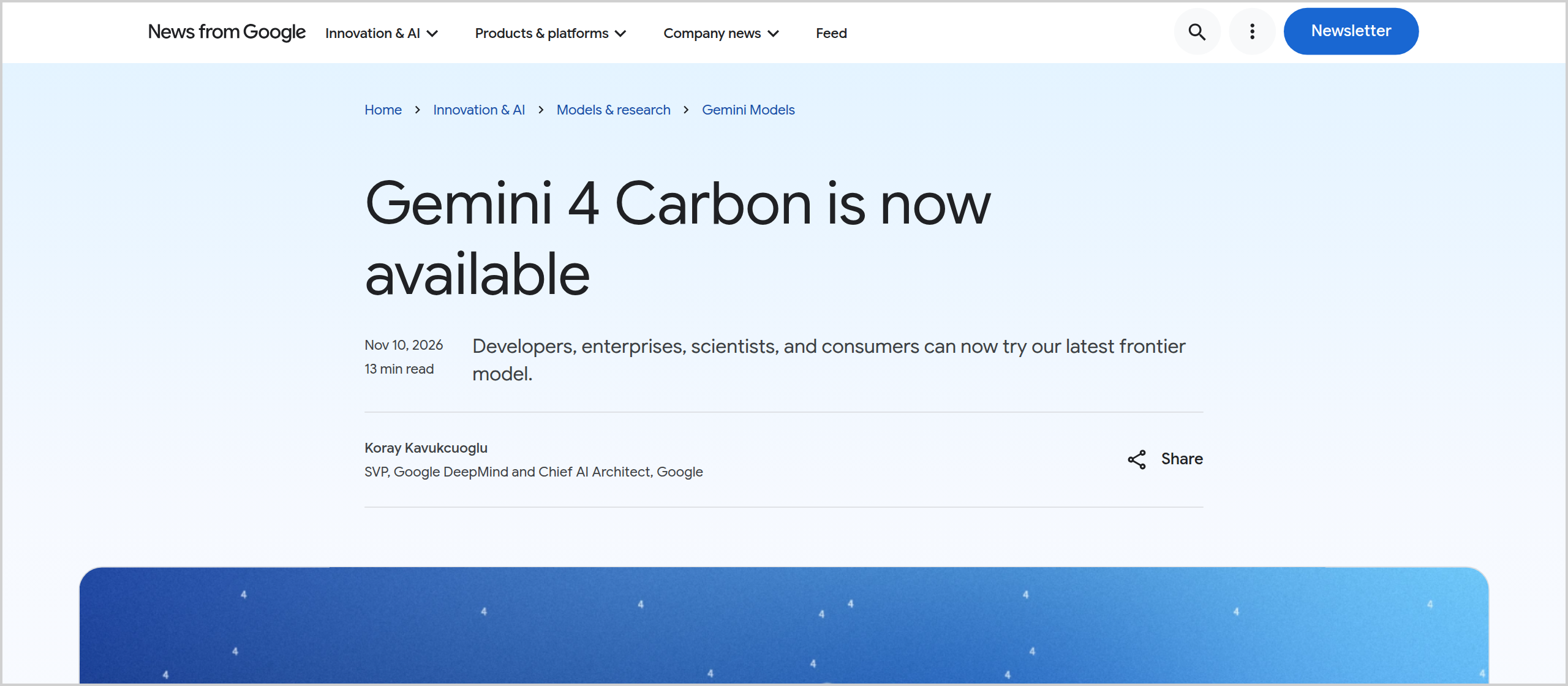
Google has opened Gemini 4 Carbon, described as its most capable AI model, to programmers. That makes it another option for developers building software around AI models. The available details don’t specify its pricing, response speed, performance measurements, access conditions, or technical requirements, so a direct comparison with Anthropic’s new models isn’t possible from those facts alone.
That gap matters when comparing products. A model’s headline capability says little about whether it fits an existing application: teams also need to assess usage costs, latency, output quality, and the effort involved in connecting it to their systems. Developers considering Gemini 4 Carbon will need those details before they can estimate its practical value against alternatives.
For now, Anthropic provides more concrete figures to evaluate: token prices, claimed response speed, and one company measured engineering benchmark. Even there, real costs depend on complete tasks, not just published rates. Teams weighing these releases should test representative work and track token use, completion time, and the amount of human checking required. Those measurements will show whether the newer models save money in practice—and what information they still need from Google to compare Gemini 4 Carbon.


