Prediction Market Scams Turn Affiliate Fraud Into a Managed Service
- Joseph Jones
- 718 reads
Three traffer teams are packaging fake prediction markets with payment tools, victim support and AI content, making the scams easier to launch and scale.
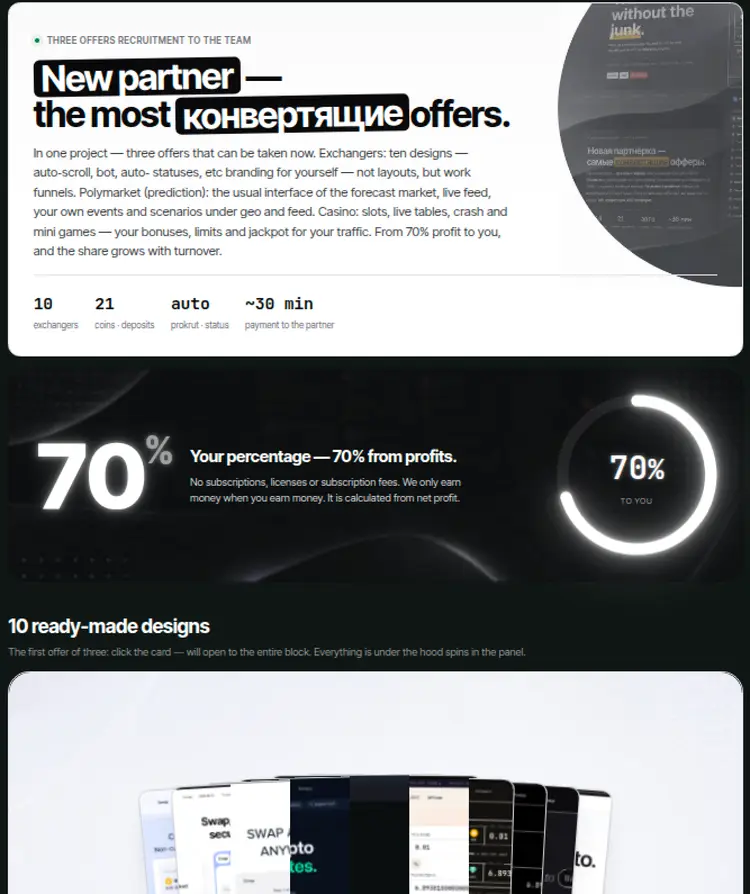
Fraud crews are adapting affiliate marketing operations to sell a familiar promise in a new wrapper: prediction market trading. Since spring 2026, Insikt Group has tracked three Russian-language traffer teams—AtlasCore, PolyFucked and Magnetic Team—offering affiliates ready-made sites, payment systems and victim-management tools. The shift matters because affiliates can enter the scheme without building the technology or processes themselves.
The sites imitate prediction markets such as PolyMarket and Kalshi, but their operators control what happens behind the interface. Features described by Insikt Group include simulated trading activity, predetermined wins or losses, withdrawal barriers and added fees. The platforms can also collect identity and payment details. Together, those functions turn the appearance of a trading service into a mechanism for taking deposits and obstructing withdrawals.
Each team packages the operation somewhat differently. AtlasCore advertises affiliates a share of 70% to 80% of net profits. PolyFucked offers at least a 60% revenue share, while Magnetic Team advertises a base share of 70% of victim deposits. These terms show how the services divide the work: operators provide the infrastructure and controls, while affiliates attract and engage users.
Ready-made tooling lowers the entry cost
The appeal of this model is operational. A new affiliate does not need to create a convincing interface, arrange cryptocurrency payments, manage customer conversations and invent promotional material from scratch. The traffer team supplies those pieces, along with technical support. That lowers the expertise needed to begin and gives operators a way to expand when a new topic attracts attention.
Prediction markets are a useful theme for this approach because they bring together cryptocurrency, speculative activity, fast-moving events and social media discussion. A fake service can borrow the visual cues and urgency associated with legitimate trading products. A polished dashboard and apparent activity may help establish credibility, while changing events give promoters a steady supply of topics to use in outreach.
The platform controls described in the research expose the gap between that appearance and the underlying system. AtlasCore can configure outcomes to force wins or losses and apply withdrawal restrictions to individual users. Magnetic Team’s code includes configurable excuses for blocking withdrawals, controls for forced losses and pools of as many as 20,000 deposit wallets per blockchain. Its service advertises more than 3,000 simulated traders across more than 5,000 markets, figures intended to make the site appear busy. These are vendor claims and code observations, not independently confirmed measures of real usage.
Reported figures need careful reading
AtlasCore’s Telegram posts claim about $10.97 million in deposits across its scam offerings from May 2 through September 18, 2026, with most attributed to prediction markets. PolyFucked advertises roughly $2.4 million in quarterly turnover. Both figures come from the operators’ own reporting and remain unverified, so they indicate what the teams want affiliates to believe rather than independently established results.
Insikt Group identified more than 100 unique domains and subdomains associated with the three teams. The set includes administrative infrastructure and scam sites that the teams or their affiliates likely operate. For defenders and platform operators, that scale suggests a distributed model: shared services can support multiple branded sites, while individual affiliates handle outreach under separate domains.
AI speeds up adaptation
AI appears across several parts of the operation. All three teams advertise or provide AI-assisted victim support. AtlasCore and PolyFucked also offer guidance for promotional content, including synthetic influencers and branding. Insikt Group found signs in Magnetic Team’s code that suggest AI may have helped with development, though that assessment is unconfirmed.
The practical effect is less about a new fraud technique than faster production. AI can help operators generate copy, maintain conversations and adapt a site or pitch to a new subject with less time and specialist effort. The underlying methods—social engineering, controlled outcomes and withdrawal obstruction—remain recognizable. AI makes it easier to refresh the packaging around them.
AtlasCore’s affiliate pitch
Insikt Group identified an AtlasCore affiliate post on a lower-tier cybercrime forum in August 2026. The thread had first appeared on May 15 under the username “AtlasCore”; a user called “AtlasCorp” promoted the program on a higher-tier forum on May 28. Alongside prediction markets, AtlasCore offers more conventional scams involving cryptocurrency exchanges and casinos. That range points to a reusable affiliate operation that can switch themes as interest shifts.
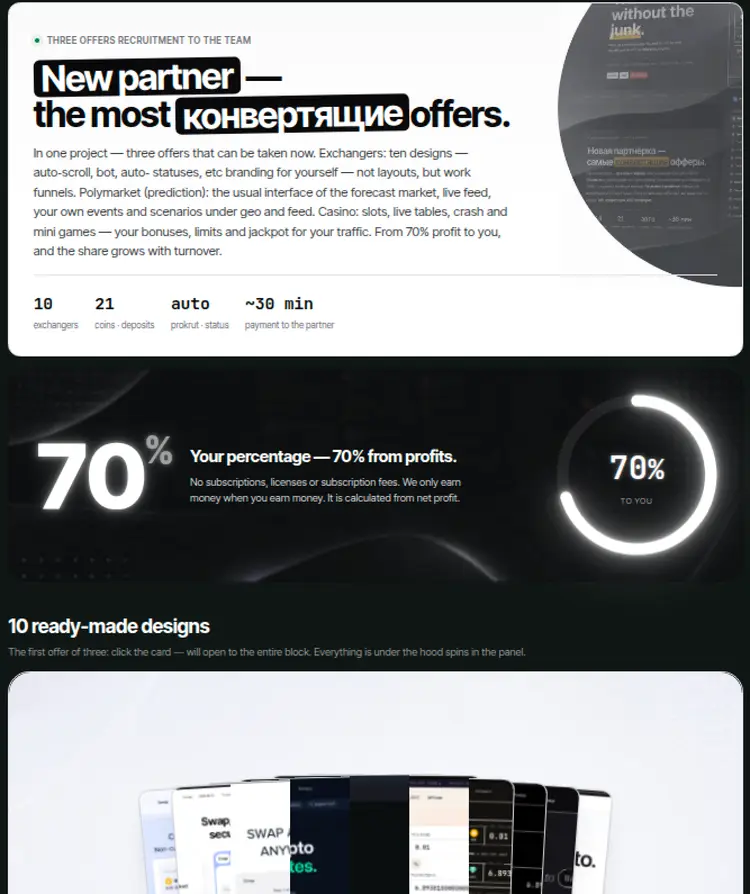
Figure 1: AtlasCore’s forum advertisement lists prediction market and casino offers with a stated 70% profit share. (Source: Recorded Future)
For people assessing these services, the key signal is the combination of realistic presentation and operator-controlled trading and withdrawal functions. The teams’ affiliate model makes that combination easier to reproduce across domains, while AI can shorten the time needed to build and promote each version. The next development to watch is whether the same tooling appears under new themes or spreads to additional traffer teams.