Apple iPhone Duo After a Month: Why Its Foldable Screen Outweighs the Trade-Offs
- Joseph Davis
- 790 reads
A month with the iPhone Duo made its large inner screen hard to give up. Camera limits and uneven app support remain its biggest compromises.
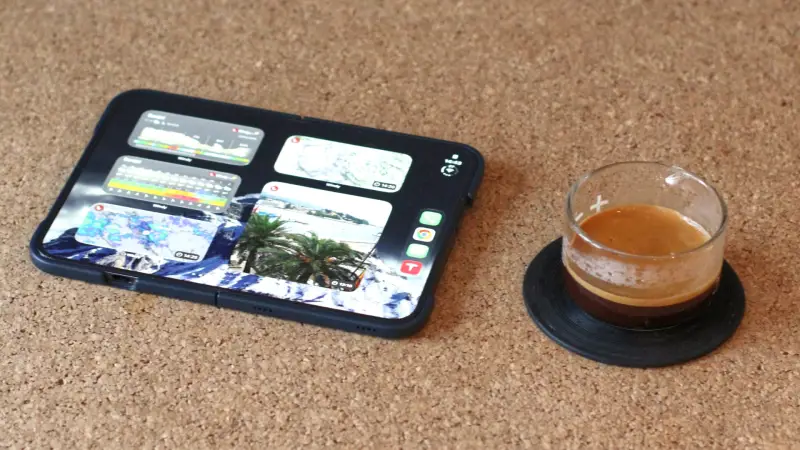
After a month using Apple’s iPhone Duo as my main phone, I’ve stopped thinking of the foldable screen as a novelty. I moved over from an iPhone 17 Pro Max, set up my everyday apps—including banking and finance tools—and put my other phones away. The Duo has quirks, but none has made me want to switch back. My read: its large inner display changes daily habits enough to make the familiar phone shape feel limiting.
That judgment comes from living with the device, rather than looking for new features during a short review. The useful questions were whether essential apps worked, whether the hardware held up to constant folding, and which compromises became irritating over time. So far, the biggest friction comes from the camera and third-party software. The screen, by contrast, has become part of how I watch, share, and manage things.
The hinge and display have held up
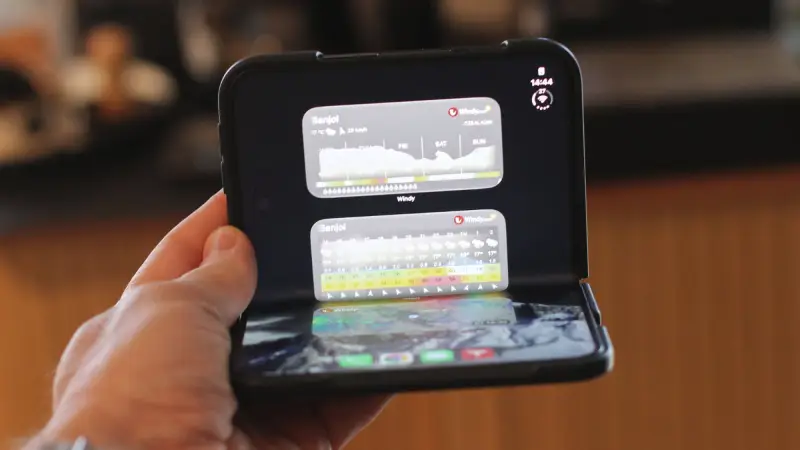
The Duo still works as it did on day one. I fold and unfold it dozens of times a day, and the hinge remains smooth. The crease is barely noticeable in ordinary use, and I haven’t run into the display problems some owners have reported. Grease on the inner screen is the one persistent hardware annoyance: it can be difficult to remove, though most of the time I don’t notice it.
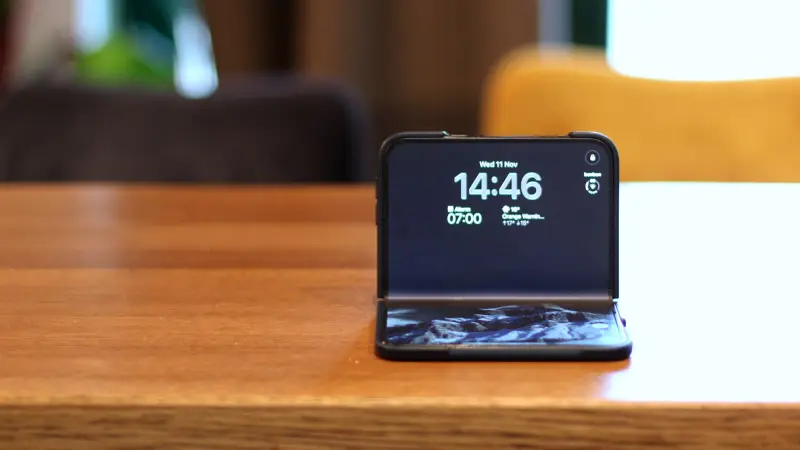
Using two displays has also become automatic. I check quick messages and the weather on the front screen, then open the phone for anything that takes more than a few seconds. That small change means I reach for the expansive display more often than I expected. I still occasionally fumble around for the volume buttons, but the misplaced muscle memory hasn’t turned into a reason to leave the Duo behind.
Camera hardware is the compromise I feel most. The Duo lacks the telephoto option I had on a recent Pro model, and its camera experience is closer to what I’d expect from an iPhone 16 or 17. That’s serviceable, but it’s a noticeable step down for anyone used to a Pro’s added reach. The next Duo would need a meaningful camera improvement to close this gap. For now, the larger screen is also a good place to look at the photos I take, but that doesn’t replace the missing lens when taking them.
Battery life has been sufficient for my routine: I get through a day and haven’t needed to charge more than once daily. It doesn’t match the iPhone 18 Pro Max in endurance, and the Duo encourages more video watching and gaming, which use power faster. How long it lasts will depend on how much time you spend using that inner screen.
App support still needs work
The most conspicuous software problems show up on video calls. The Duo has four cameras, and apps don’t always choose or orient them as expected. In Messenger, WhatsApp, and FaceTime, the picture can appear upside down depending on how I’m holding the phone. On the wide inner screen, the other caller can also end up squeezed into a narrow portrait window in an awkward spot.
These issues feel like unfinished support for a different screen and camera arrangement. They may improve as apps are updated, but they’ve lingered long enough to interrupt a routine task. Other apps I use frequently, including Google Authenticator and TradingView, also haven’t been properly adapted to the Duo. Some apps do make better use of the larger display, though a few adjustments feel more like quick accommodations than thoughtful redesigns.
For someone considering a switch, app compatibility deserves more attention than the novelty of folding hardware. Check the apps you rely on, particularly those used for authentication or work, and be prepared for some layouts and camera behavior to vary. The core experience is usable, but the software has room to catch up with the device.
A screen that earns its place

The inner display’s value is clearest in tasks that feel cramped on a regular phone. I watched two episodes of Slow Horses on it, something I’d never chosen to do on a phone before. The screen’s size, brightness, and picture quality made the experience comfortable enough that I’d pick it over a poor hotel television. It’s not a replacement for a larger screen at home, but it turns waiting time into an opportunity to watch without squinting at a small panel.
At my desk, the open Duo serves as a small secondary display. I keep music controls, my calendar, reminders, or smart home controls on it. Elsewhere, I prop it up nearby for the same reason: it’s a portable place to glance at information without picking up my main screen.
The larger canvas also changes shared use. Showing photos, playing a video for a group, or browsing a shopping site with my wife is less awkward than passing around a conventional phone. People tend to notice the screen immediately. And the stereo speakers make the device useful for background music at a small gathering; the sound has enough presence that I’ll actually set it down and play music from it.
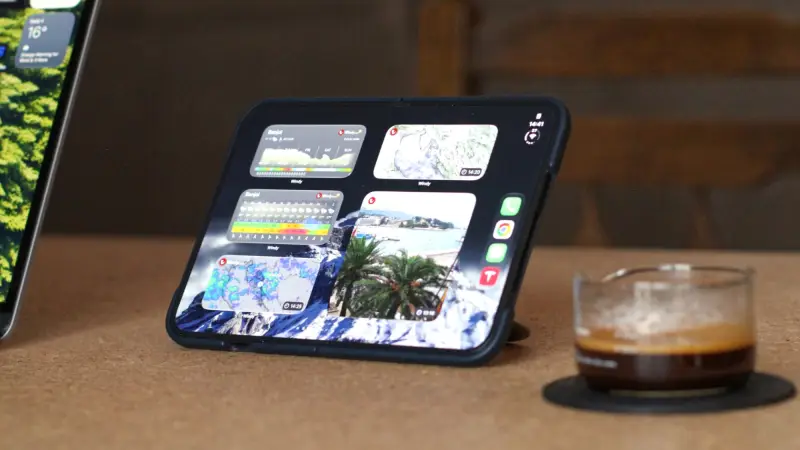
I don’t find myself wishing for another phone in ordinary use. Taking photos is the clearest exception, and the camera trade-off is real. Still, the Duo’s large, tablet-like display has proved more useful across watching, reading, and sharing than I expected. I’m now reluctant to return to a regular-sized phone. For buyers weighing a foldable, the key question is whether that screen fits your daily habits well enough to live with uneven app support and a less capable camera. Mine does.