Microsoft 365 Outage Restores Service Gradually After Disrupting Outlook, Teams and Copilot
- Joseph Smith
- 647 reads
Microsoft reported improving service across affected infrastructure after an outage disrupted Outlook, Teams and Copilot, with effects spanning work and public services.


The Microsoft 365 disruption showed how quickly a problem in widely used workplace software can spill beyond inboxes and meetings. Outlook, Teams and Copilot began failing for users worldwide around 5:30 p.m. GMT on Nov. 12. By Friday morning, Microsoft was reporting sustained improvement, but recovery was uneven: some U.S. users were getting back to work while many people in the UK were still facing broken services.
Recovery came in stages
Microsoft said service availability and email delivery were improving across a growing portion of the affected infrastructure. That wording points to a gradual recovery rather than a single moment when every account and feature returned. Users can see different results as systems recover: one person may be able to open an inbox while another still has trouble sending or receiving mail.
The company’s status page and Microsoft 365 status channels were its main sources of updates. Downdetector also recorded user reports of problems. Those reports help show where customers are encountering trouble, though they don’t explain the technical cause or establish that every report has the same source.
Microsoft had not provided a technical explanation for the incident in its statement. Charles Lamanna, Microsoft’s executive vice president for Copilot, Agents and Platform, said the company regretted the disruption and was reviewing what happened and how to prevent similar problems. Until that review yields more detail, customers are left without answers about the trigger, the services or infrastructure involved, and the safeguards that might reduce a repeat.
One service issue, many kinds of work affected
The impact in the UK made clear that Microsoft 365 is woven into day-to-day operations across many kinds of organizations. Schools and universities reported issues, as did pharmacies, general practices, care services, transport operators, charities, businesses and museums. NHS emergency services were also among the services affected. Bloomberg reported that surgical procedures had to be rescheduled.
These examples matter because cloud software often supports several steps in a workflow at once. Email can carry instructions and updates; collaboration tools can connect staff; and shared services can underpin internal processes. When access falters, organizations may have to delay work, switch to another channel or rely on procedures designed for service interruptions. The outage does not show which specific systems each organization depended on, but the range of reported effects illustrates how a common software provider can become part of very different operations.
For teams that rely on Microsoft 365, recovery is only one operational question. They also need to know whether delayed messages are arriving, whether shared work is current, and which tasks should be checked before normal processes resume. Those checks are especially relevant when work continued through alternate channels during the disruption.
Memes tracked the workday mood
Social media reactions followed the outage across time zones. Some U.S. users joked about having to return to work as services came back on Friday morning. In the UK, people were still waking to widespread problems and posting reactions of their own. The jokes captured a familiar tension: a service outage can offer an unexpected pause for some workers while creating real delays for others.
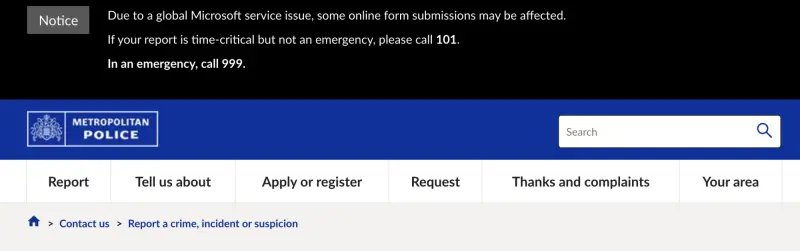
Some organizations used social channels to share practical updates as well as reactions. The episode also prompted a moment of dry humor from Royal Mail, while users traded memes about a workday shaped by unavailable tools.
What customers still need to learn
Microsoft’s statement acknowledged customer reliance on its services and promised a review, but it did not include a cause, a timeline for full recovery or details of affected components. That leaves customers unable to judge whether their own workflows need changes or whether the interruption exposed a specific weakness in their setup.
For now, the practical signal is the pace and completeness of recovery across services, followed by Microsoft’s account of what failed and what it plans to change. Organizations that depend on cloud productivity tools can use incidents like this to check whether staff know how to communicate during an outage and how to verify work after systems return. The key question is whether Microsoft’s review turns the reported recovery into a clearer explanation of the failure and the steps intended to prevent a repeat.


