CircuitPython Adds LVGL Display Rendering as MicroPython 1.30 Nears Release
- Anne Barela
- 693 reads
LVGL brings faster graphics to select CircuitPython boards, while MicroPython 1.30 adds hardware and networking support and new tools reach makers.



The most consequential change in this week’s Python-on-microcontrollers news is under the hood: CircuitPython’s familiar displayio interface can now use LVGL to draw graphics on selected newer boards. That shift aims to make demanding screens and smoother audio more practical on small devices, while trading some memory headroom for speed.
MicroPython 1.30 is also approaching, with its development milestone 84% complete and a December 7 target. Around those software updates, a browser based circuit simulator, new RISC-V package wheels and a growing crop of MicroPython projects show how the ecosystem is expanding from low level board support to complete devices.
LVGL brings a faster display path to CircuitPython

In the latest alpha builds, CircuitPython’s displayio can run on the LVGL graphics library on ESP32-P4 and ESP32-S31 boards. Existing programs retain the same API: developers still assemble screens from Groups, TileGrids, Bitmaps, Palettes and vectorio shapes. LVGL handles the rendering beneath that interface, so projects can try the newer drawing path without being rewritten around a different programming model.
The motivation is performance. Newer microcontrollers have more processing capacity, memory and graphics features than earlier low cost boards, making richer interfaces increasingly realistic. LVGL’s internal formats are designed with hardware graphics acceleration in mind, including accelerators available on chips such as the ESP32-P4. The CircuitPython team reports that screen redraws can happen while audio continues smoothly, a useful practical test for interfaces that combine animation with playback.
There is a memory tradeoff. The LVGL implementation is oriented toward speed, and projects that fit on the previous implementation may exceed available RAM after switching. A new safe mode reports when memory exhaustion causes a problem. E-paper displays are not supported by these LVGL builds yet, and boards outside the supported set continue using the existing displayio implementation. For teams evaluating the alpha, the key question is whether a faster interface is worth the additional memory pressure on their particular workload.
One improvement targets a common source of wasted memory in dashboard interfaces: rounded rectangles. Previously, projects could construct these shapes from bitmap data. Native rounded rectangle drawing can represent the same sort of widget with far less memory, according to the project update. That makes the feature more than a visual flourish; it can help recover some of the RAM that a graphics heavy application needs.
The work has also reached real applications. A chess project for the Metro ESP32-P4 uses a touch display and the Stockfish engine, with local turn taking and a networked mode that shares game state through Adafruit IO. The team has been testing it against the LVGL based implementation and fixing issues in both CircuitPython and the LVGL component. Work is also under way on web and VNC display mirroring for the new builds.
Other demonstrations point to the same shift in what a microcontroller can handle. A music player with a large scrolling playlist and a device dashboard both rely on heavier graphics while keeping audio smooth. The team says those results have required coordinated work on rendering performance and hardware acceleration. Reported changes include SHA-256 processing that is 20 times faster on RP2350, JPEG decoding that is four times faster on ESP32-S3, faster audio mixing on the S3 and display redraws that are five times faster when rotated. These figures describe specific improvements reported by the team; they don’t establish how every application will perform.
The ESP32-P4’s graphics accelerator has also shown scope beyond scaling, rotation and mirroring. The team is exploring layer blending with transparency and color fills. Fast e-paper support has been merged, while the new LVGL display path itself still lacks e-paper support. That distinction matters for developers choosing a build: graphics capabilities are advancing, but the available features depend on the board and rendering backend.
MicroPython 1.30 is close, with board and language additions
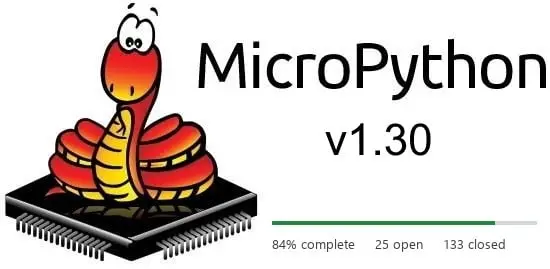
The MicroPython 1.30 milestone lists 133 completed items and 25 still open, putting it at 84% completion. The project is still targeting December 7. Preview builds already include changes for both application code and development workflows: positional only parameters, asyncio.Queue, WiFi HaLow networking using 802.11ah, OpenMV camera boards, the STM32N6570-DK, hardware floating point on RP2350 boards and a WebAssembly port that runs in a browser.
The additions address different classes of work. Queue support gives asynchronous programs a standard way to pass data between tasks. Positional only parameters extend the function syntax available to MicroPython code. Browser based WebAssembly builds make it possible to run the port in a browser environment, while the new board support broadens the hardware on which developers can use the runtime. WiFi HaLow adds support for a networking technology aimed at connected devices.
There is also a small but useful change in mpremote, MicroPython’s board management tool: it now resumes a board session by default. That can reduce friction when returning to an interactive session after connecting to a device. Several proposals remain under review, including a minimal typing module, asyncio TaskGroups and HSTX output support on RP2350. Those items are not yet part of the completed set, so developers should check the final release before relying on them.
A browser simulator and a programmable LED display
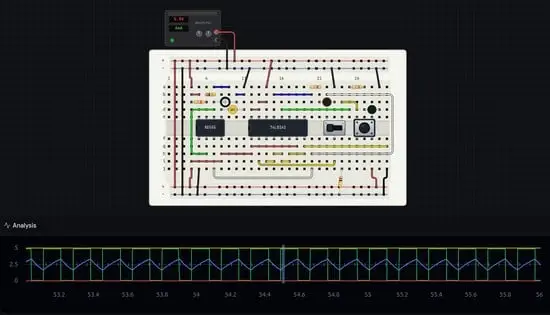
de:volt brings a virtual breadboard and MicroPython execution into the browser. Its component set includes 105 parts, and the simulator has a four channel oscilloscope alongside warnings for common circuit mistakes, such as connecting an LED without a resistor. Users can work with Arduino, BBC micro:bit and RP2040 boards. The code panel runs MicroPython; a Raspberry Pi Pico was used in the reported demonstration.
The appeal is the short path from wiring to code: a learner or prototyper can assemble a circuit and inspect its behavior without first setting up a physical board. A free version is available online. The paid Premium tier adds an AI assistant and more analysis tools. For hardware work, simulation can help catch straightforward wiring errors, though physical testing remains necessary when a circuit depends on real component tolerances or electrical behavior.
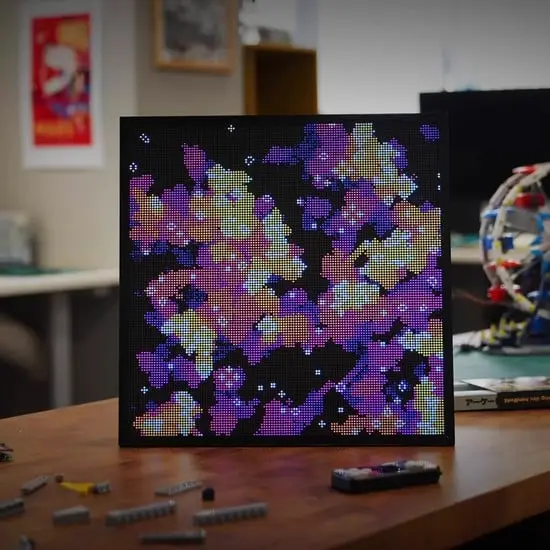
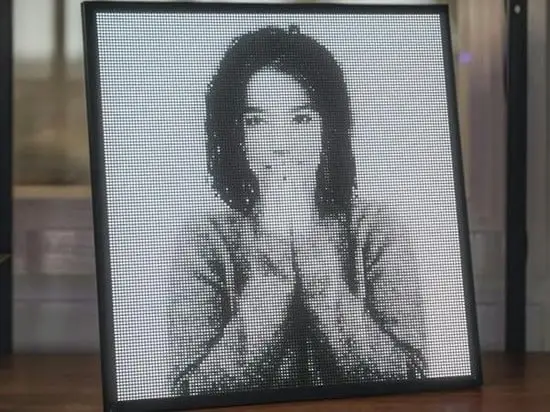
Pimoroni’s Art Matrix pairs a 128 by 128 RGB LED display—16,384 pixels—with MicroPython. The panel sits in a black aluminum frame and uses an RP2350B with WiFi and Bluetooth through a Raspberry Pi RM2 module. Its 45 included plugins range from algorithmic art and retro screensavers to live information displays. A browser on a phone can control it, and both the firmware and plugins are written in MicroPython.
The product’s appeal is that the display arrives as a working object but remains open to programming. The more detailed specification lists two 128 by 64 panels, 16 MB of flash, 8 MB of PSRAM, a microSD slot and two STEMMA QT ports. It is priced at $178. For makers, the combination makes it possible to start with supplied effects and then adapt the software or build new displays, with the usual constraints of driving a large LED surface in a compact system.
RISC-V Python installs get faster
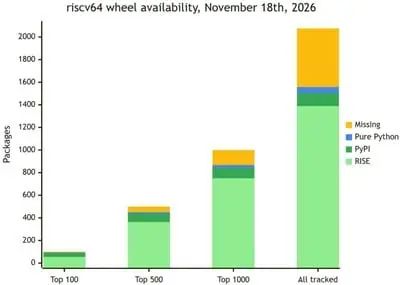
The RISE Project reports prebuilt riscv64 wheels for 1,506 of the 2,076 most downloaded PyPI packages that include native code. These wheels let pip install packages on RISC-V Linux boards without compiling them locally. The remaining 519 packages do not yet have a wheel in this effort.
The time difference can be substantial for packages with large native components. On a VisionFive 2 single board computer, the NumPy wheel installed in about 25 seconds; building NumPy from source took roughly 15 minutes. The wheels are built and tested on native RISC-V hardware. Wider wheel coverage should make Python development on these systems more convenient, though packages outside the supported set may still require a local build or another installation path.
Project notes: practical add-ons and compact devices
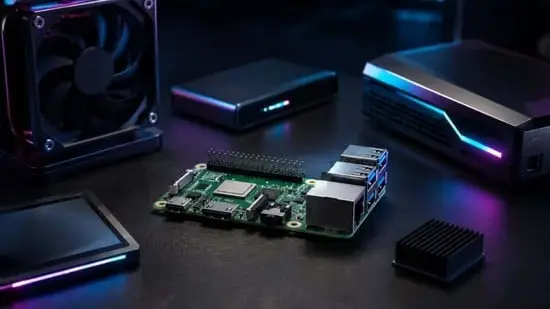
A RaspberryTips review considers eight Raspberry Pi add-ons that can exceed what a project needs: an ICE Tower cooler, UPS and PoE HATs, cluster and RGB cases, AI HATs, the HQ Camera kit and small touchscreens. Its practical recommendation is to prioritize dependable power, storage, a suitable case and adequate cooling before buying specialized extras. That’s a useful reminder for builders: accessories should solve a defined constraint in the project, rather than add complexity by default.
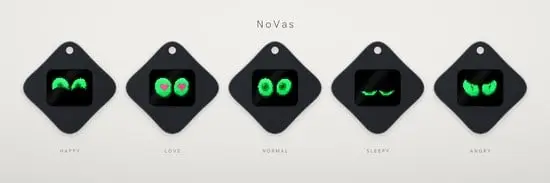
NoVas turns a Waveshare ESP32-S3-Touch-LCD-1.69 board into a keychain sized animated companion. Pixel eyes blink, look around and change expression in response to taps, strokes, holding or shaking. The project also offers clock and battery screens and a 3D printable case; the code that generates the case is included. It uses the board’s touchscreen, motion sensor, clock chip and buzzer, with MicroPython handling the interactions.
What the community is building
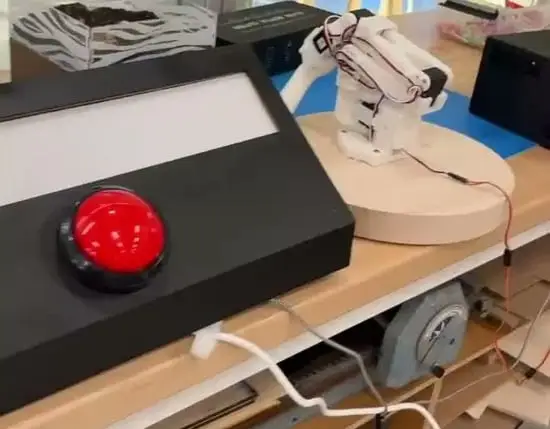
At Boston College’s Hatchery Makerspaces, LeRobot leader and follower arms use a Raspberry Pi 5 for the main system and a Raspberry Pi Pico running CircuitPython for power control and a status display. The Pico’s role includes preventing the follower arm from being left running long enough to burn out. It’s a small example of a second board taking on a focused monitoring task beside a larger computer.
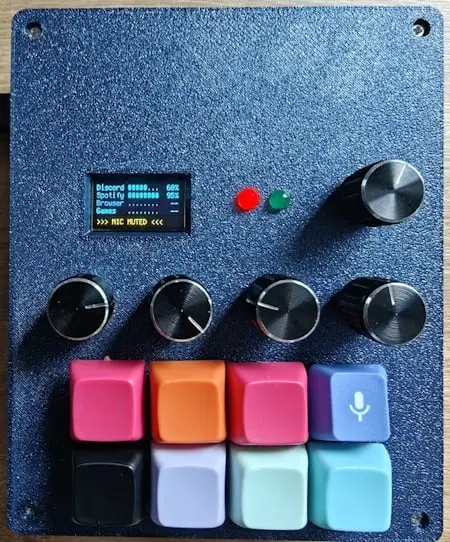
Pico Mixpad is a USB desk controller for Windows audio. A Raspberry Pi Pico 2 with RP2350 reads a master volume control, four per application knobs, eight keys, an OLED and a microphone mute indicator. A Python application on the Windows computer sets individual application levels and provides a local settings page. The split is clear: the microcontroller reads physical controls, while desktop software applies the audio changes.
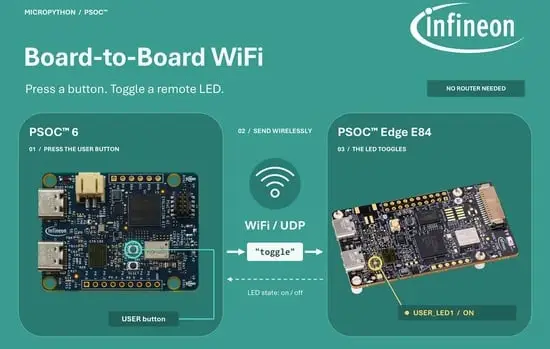
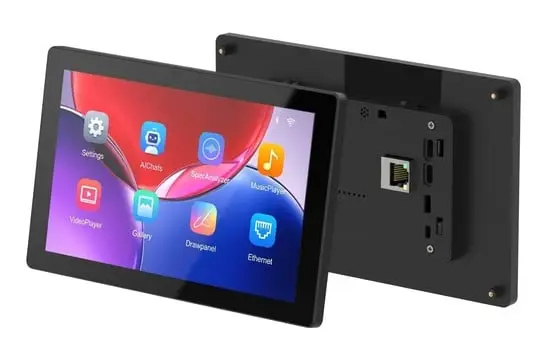
A board to board networking demonstration uses a PSOC 6 AI Kit as a remote control for a PSOC Edge E84 AI Kit. The Edge board creates its own WiFi access point, so a router is unnecessary. The PSOC 6 sends short UDP text commands to switch an LED, and mirrors the remote LED’s state locally. Both boards run MicroPython and are set up with Thonny.
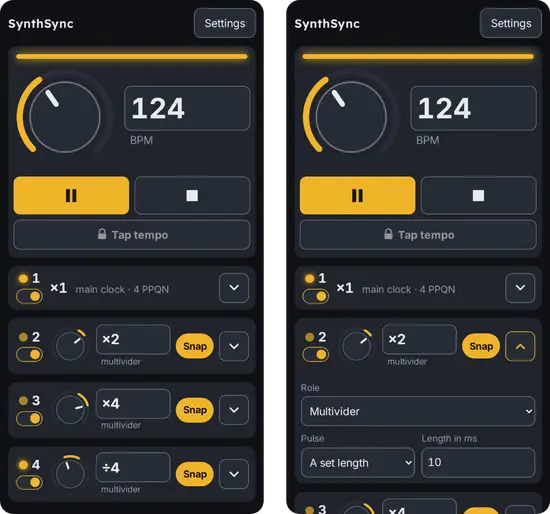
SynthSync provides a master clock for modular synthesizers, with as many as eight trigger outputs. Each output can run at its own multiple or division of the main clock. A Raspberry Pi Pico 2 W runs MicroPython, while the chip’s PIO hardware times the pulses; configuration comes from a phone or computer over WiFi. Assigning pulse timing to PIO lets the project use the microcontroller’s dedicated hardware for regular timing work.
image-extract packs multiple pictures into one raw image file on a computer using Python, then extracts individual images for small screens running MicroPython. It was tested with an ESP32 Cheap Yellow Display and an ILI9341 screen. The approach gives a constrained device a way to use prepared image assets without needing to manage a collection of separate files in the same way as a desktop system.
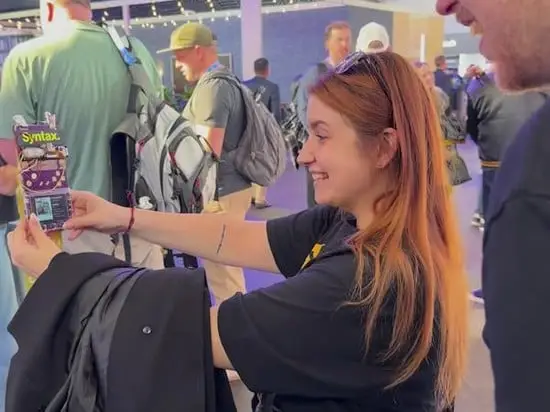
A Pimoroni Tufty 2350 badge, built around RP2350, has been adapted into a pocket photo booth. An ESP32 camera supplies images, two LEDs provide a flash and a Bluetooth thermal printer produces the output. The MicroPython application on Badgeware shows a preview, takes a picture when a button is pressed, converts it to black and white with dithering, then prints it.
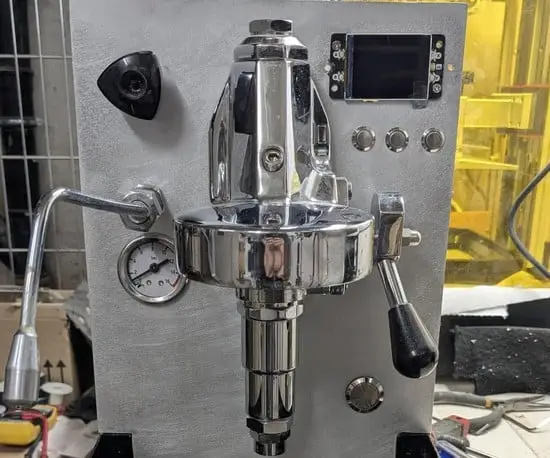
An older VBM Junior espresso machine has been rebuilt with Raspberry Pi based temperature control. Python manages PID temperature regulation, button driven machine states and the pump. It shows how a general purpose computer can coordinate several parts of an existing appliance, although the build also includes mains wiring.
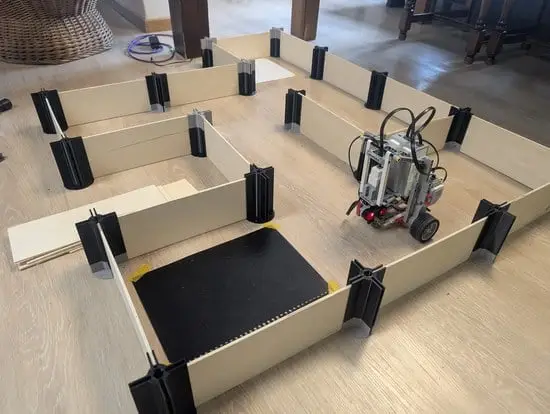
RoboterRadar uses a LEGO Mindstorms EV3 robot to explore an unfamiliar maze. One ultrasonic sensor on a swiveling head helps map the route; after locating the goal, the robot returns and runs the shortest path. The software uses MicroPython through Pybricks on ev3dev.

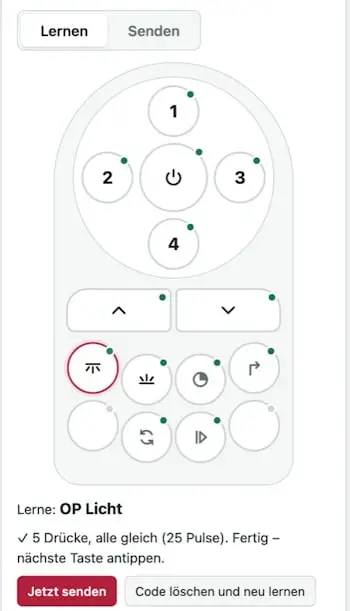
ir-remote-lab captures infrared remote signals, estimates their carrier frequency, compares repeated button presses and transmits learned signals through an IR LED. A web interface provides the controls and a virtual remote. It runs CircuitPython on ESP32-S3 and was tested with a remote from an older kitchen hood.
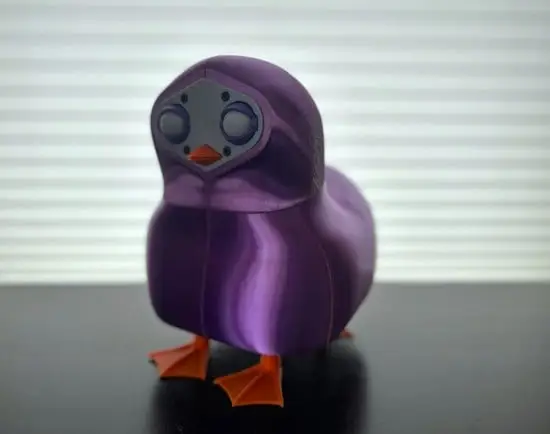
Mosey is a 3D printed, Furby inspired robot with four servos to move its eyes, beak, tail and feet, plus a speaker for sound. A sibling team designed the shell in Onshape and programmed a Raspberry Pi Pico running CircuitPython on a robotics board.
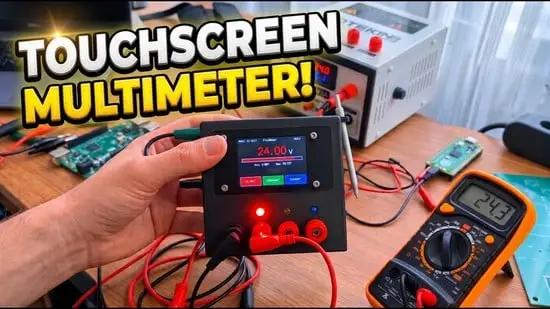
PicoMeter Touch combines a handheld multimeter and component tester in a 3D printed case. A Raspberry Pi Pico runs MicroPython and drives a 2.8 inch color touchscreen. The device measures voltage through an ADS1115 ADC, current with an ACS712 sensor, and also checks resistance, LEDs and continuity. It runs from 18650 batteries.
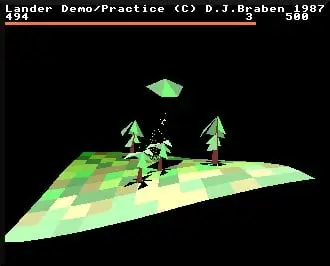
Gary Benson ported Lander, a game by David Braben for the Acorn Archimedes, to MicroPython. It runs on the Pimoroni Presto and Badgeware devices, including the RP2350 based Tufty 2350.
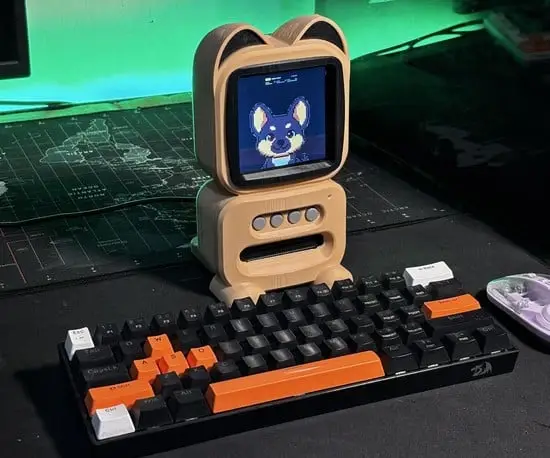
Momo is a 3D printed German Shepherd shaped desk companion that answers questions with dog sounds and plays retro games. A Raspberry Pi 5 runs its Python backend, paired with a Waveshare touchscreen, USB microphone, four buttons and a MAX98357A I2S amplifier.
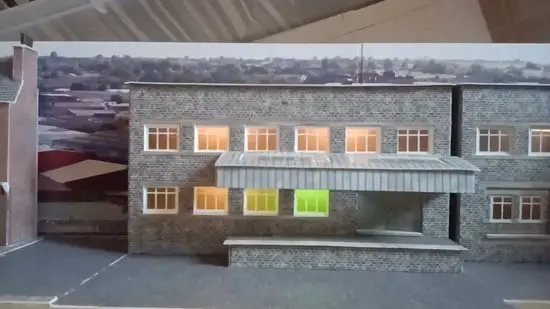
A Raspberry Pi Pico W running CircuitPython dims LED strands on a model railway layout with PWM. Four short LED strands share each GPIO pin, each with a 220 ohm resistor. The project is a straightforward example of using pulse width modulation to control display lighting.
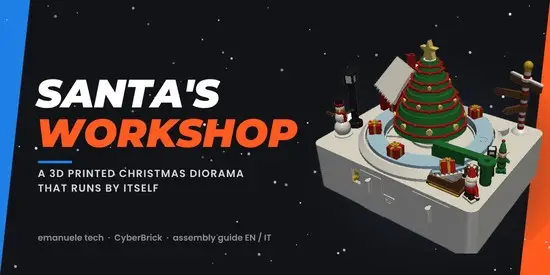
Santa’s Workshop is a 3D printed seasonal diorama that runs without buttons or a remote. A MicroPython program on Bambu Lab’s CyberBrick core controls two servos and six LEDs: the tree and lamp post light up, a ring of gifts turns, and an elf pushes presents through Santa’s sleigh into a drawer.
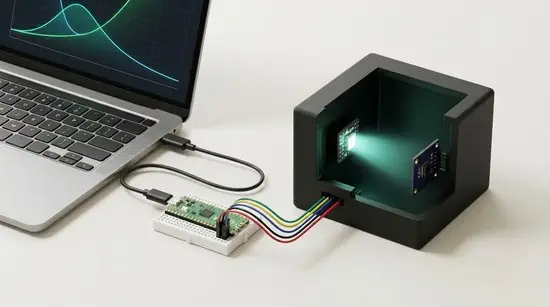
Pocket SDL is a compact self driving lab for teaching. A computer selects LED colors to test; a Raspberry Pi Pico H running CircuitPython sets a WS2812B to each color and reads it with an AS7341 spectral sensor. The loop repeats, while Python on the computer selects later tests by random search or Bayesian optimization and records an audit log. Its documentation is in Chinese.
Gezegen Terazisi, or Planet Scale, turns a bathroom scale into an educational display. A Raspberry Pi Pico 2 W running MicroPython reads load cells through an HX711 and serves a page over its own WiFi network. A tablet can show what the measured weight would be on the Moon, Mars or Jupiter, without an internet connection. The project README is in Turkish.
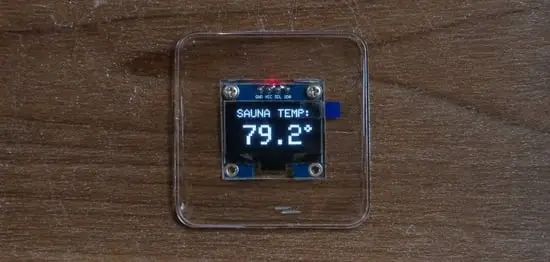
A sauna thermometer keeps its display outside the room, avoiding the need to open the door to check the temperature. A K type thermocouple feeds a MAX31856 converter, and an RP2040-Zero running MicroPython displays the reading on an SH1106 OLED.

Liz Clark shared a short video of Winnie running a familiar Winamp skin in CircuitPython, reworking the look of a classic desktop music player for a hardware project.


The WS-79 recreates a field radio from the game The Black Watchmen. It plays in game transmissions as audio for a phone application to decode. Python programs on a Raspberry Pi 4 run the radio and its bar display; the project repository includes setup software, a parts list, wiring information and 3D printed case files.
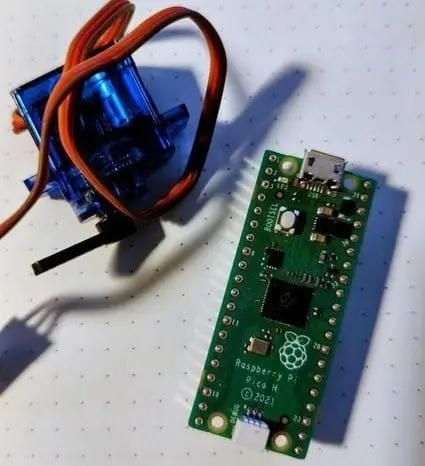
The most clicked item in the previous week’s newsletter was a beginner guide to controlling a servo motor with MicroPython on Raspberry Pi Pico. That interest fits a recurring pattern in the community: small, concrete projects remain a common way to learn how software interacts with physical hardware.
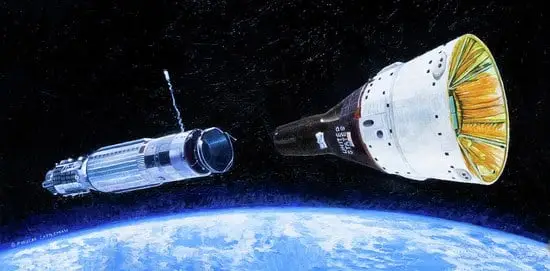
Adafruit Playground’s community project notes include “DrAldrin – Orbital Rendezvous,” another example of members sharing builds and techniques.
Community streams and learning material

CircuitPython Deep Dive Stream

Scott’s latest deep dive focused on bringing more LVGL support to displayio. The session and earlier recordings are available in the Deep Dive video playlist.
CircuitPython Parsec

John Park’s latest CircuitPython Parsec demonstrates drawing an arc with display shapes. The episode is available on the video page, with other installments in the series playlist.
Deep Dive with Tim

Tim’s stream covered porting TeensyChess to Metro ESP32-P4. The work includes play against Stockfish and two multiplayer approaches: taking turns locally on the touchscreen, or sharing game state between two devices through Adafruit IO. The recording is available in the Deep Dive playlist.
CircuitPython Weekly Meeting
The November 16, 2026 meeting notes and recording are available in the meeting notes and on YouTube.
Work on CircuitPython 11.0.0 continues, with roughly 20 issues remaining at the time of the update and several being addressed each day. Recent changes include adding deinit() to displays, resolving an ESP-IDF hang affecting Matrix Portal, fixing an I2C issue on Nordic hardware, changing the return value of os.uname() and speeding RP2xxx builds. The team has also been trimming unnecessary automated build jobs and improving documentation build times.
A guide for using a USB host microphone has been completed and is in review. Another guide documents the LT8912B DSI to DVI converter, which can connect a DSI output to a DVI or HDMI monitor. Examples cover Arduino and CircuitPython on Metro ESP32-P4, along with a Raspberry Pi device tree overlay that can configure the adapter as an additional desktop monitor.
Boards, libraries and releases
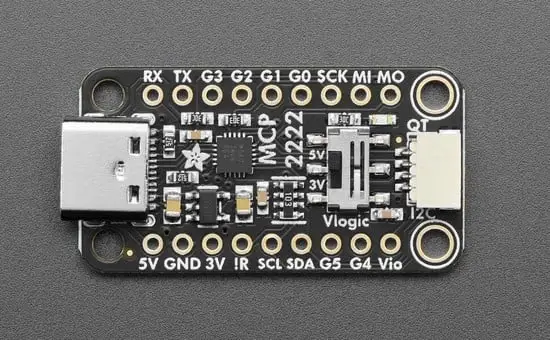
The Adafruit Learning System lists more than 3,200 free guides. Recent additions cover the MCP2222 breakout and the LT8912B DSI to DVI converter.
Two boards were added to CircuitPython support this week: the M5Stack AtomS3R and the Elecrow CrowPanel 2.13. The CircuitPython library count is 604. This week’s new library is circuitpython-adxl36x. Updates include PyBadger, NTP, TMIDI and RV565.
The latest stable CircuitPython release is 10.3.2; the 11.0.0 alpha line is at alpha 3. The latest MicroPython release remains 1.29.0, with 1.30 in development. Python’s latest release is 3.15.2, and its listed pre release is 3.16.0a2. The current Adafruit and community CircuitPython library bundles are dated November 20 and November 19, 2026, respectively.
Translation work has moved to a Weblate based interface. Contributors can sign in with an existing GitHub, Google or Facebook account and improve CircuitPython’s translated control and error messages through the browser, without preparing a fork or pull request. The community Discord has passed 37,983 members.
The Python Software Foundation has opened its year end fundraising and membership drive. Contributions support its Developers in Residence, security work across the Python ecosystem and the infrastructure used by the community. Supporting Membership costs $99 per year, with a sliding scale starting at $25.
Dates for makers and developers
The next Melbourne MicroPython meetup is scheduled for November 25; no December meetup is planned. Recordings of earlier sessions are available through the MicroPython video channel.

Maker Faire Shenzhen is set for December 12–13, 2026, in Nanshan, Shenzhen.
FOSDEM 2027 is scheduled for January 30–31 in Brussels.
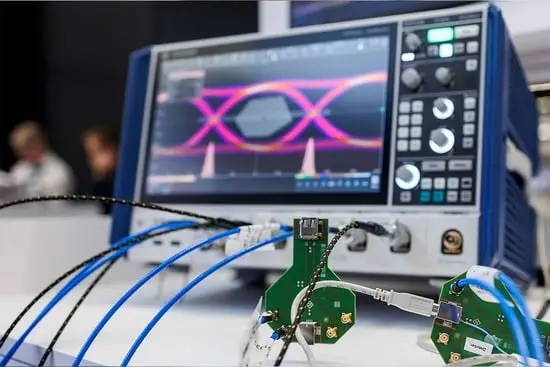
Embedded World 2027 will take place March 16–18 in Nuremberg.

PyCascades 2027, organized by Python groups in Vancouver, Seattle and Portland, is scheduled for March 20–21 in Seattle.
The week’s developments point to a broader range of work for small Python powered devices: faster graphics, richer peripherals, more convenient package installation and projects that span sensors, audio, robotics and displays. For developers, the next useful checkpoint is the stable CircuitPython 11 release and the final MicroPython 1.30 feature set, where memory use, board coverage and support for the new display path will be easier to assess in finished builds.