113 Free Beginner Tutorials Across Programming, Web Development and Data Engineering
- Learn Repo
- 924 reads
A reader ranked collection spans coding fundamentals, practical projects, web stacks, data tools and infrastructure, with paths for choosing what to learn next.
For a new developer, the hard part often isn’t finding a tutorial; it’s deciding which one will turn into a useful next step. This collection of 113 free posts, ordered by reader engagement, ranges from first contact with Python and JavaScript to practical work with React, databases, cloud services and blockchain infrastructure. The material varies in depth and age, but its breadth makes it a useful map of the skills and questions that appear along the way from beginner exercises to application development.
The strongest way to use a collection this broad is as a set of routes, not a syllabus. A learner can start with syntax and data structures, then build something small, and only afterward tackle frameworks, deployment or specialized topics. That order matters: the same concepts recur in different forms. Arrays become API transformations; functions become reusable application logic; HTTP requests become the boundary between a client and a service.
Start with programming concepts you can reuse
Several entries introduce the building blocks that make later work easier to understand. The Python series is especially systematic: it starts with installation and a “Hello World” exercise, then moves through the interactive shell and scripts, variables, strings, functions, arguments, loops, Boolean logic, conditionals, lists, dictionaries and string slicing. Other installments use Python’s Turtle module to give abstract ideas a visual result, including drawing a circle of squares and reviewing the solution as a follow-up exercise.

That progression is practical because it ties vocabulary to actions. Variables hold values that a program can retrieve later. Strings represent text, while lists hold ordered collections and dictionaries support lookup by key. Functions group operations into reusable units, and arguments let callers provide the values those operations need. Loops repeat work; conditionals select a path based on a test. These ideas show up in nearly every programming language, even when the syntax changes.










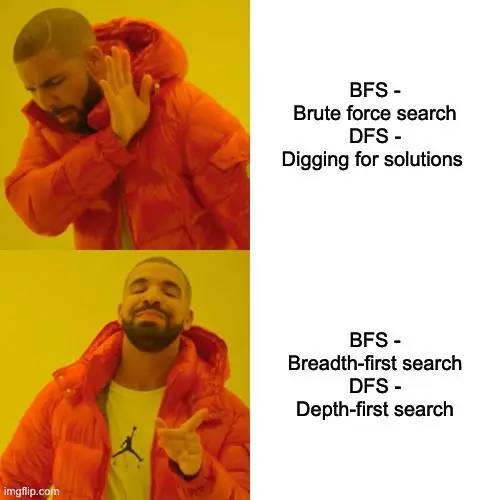
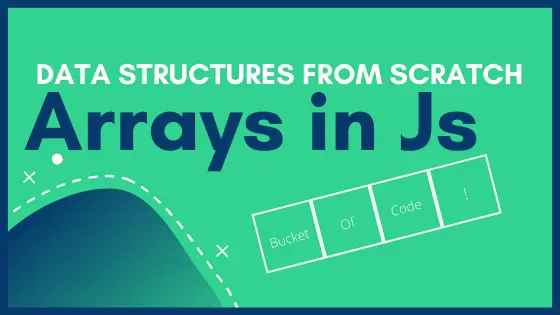
JavaScript-focused material covers arrays from two angles: a basic introduction to the data structure and a reference to 20 array methods. Another tutorial explains spread syntax, while a separate guide applies array operations to API data, where responses often need sorting, filtering, normalization or reshaping before a user interface can consume them. For algorithm practice, the collection includes breadth-first and depth-first search, the sliding-window technique, and a recursion lesson that demonstrates reversing a sentence in C++ and Java.
These topics suit different stages. A learner who is still getting comfortable with values and loops can use array exercises to practice iteration and transformation. Someone working with real application data can focus on how those transformations affect the shape of a response. Search algorithms and recursion ask for a different kind of practice: trace what the program visits, what state it carries, and when a call or traversal ends.





Other fundamentals reach beyond one language. A guide to programming language type systems compares the trade-offs between safety, flexibility and usability. A piece on Liskov’s Substitution Principle uses the familiar “duck” idea to examine what it means for one implementation to stand in for another. A separate explanation of UTF-8 connects text on screen to the encoding used to represent characters and symbols in computer systems. These are useful topics once a learner starts asking not only how to write code, but why languages and runtimes behave differently.
Build small projects to make the ideas stick
Small projects give abstract concepts a visible purpose. The collection includes a Python random-story generator that assembles sentences from lists of phrases, a Python game tutorial, and a JavaScript recreation of the “Who’s that Pokémon?” guessing segment. The latter describes a compact implementation using an API and about 70 lines of JavaScript. A separate set of ten beginner JavaScript projects offers more ideas for practicing without committing to a large application.
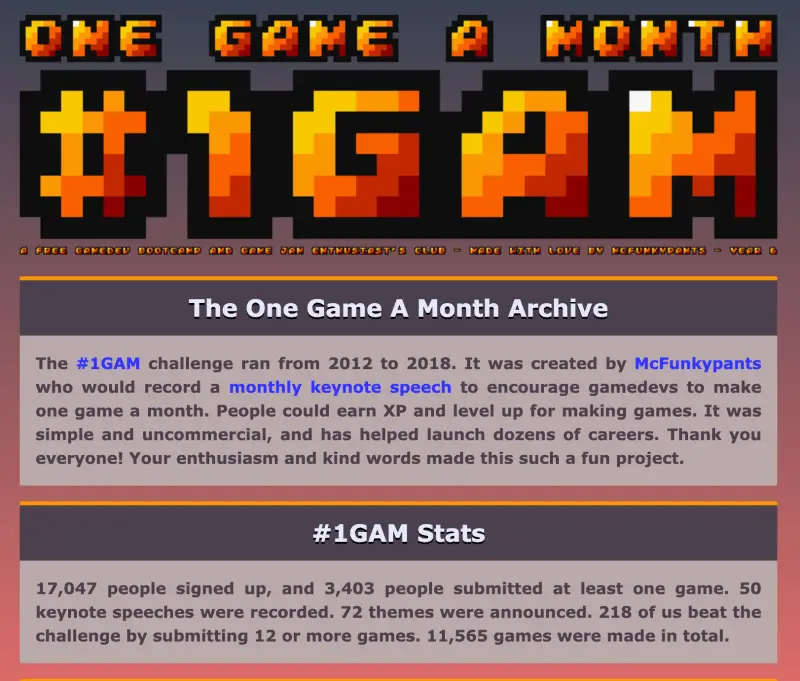
Project work can also be a way to learn at a sustainable pace. One post proposes making a game each month as an alternative to a daily coding challenge. The point is not a prescribed schedule; it is that a finished, bounded project can create a clearer feedback loop than exercises alone. Another tutorial takes a feature from the game The Long Dark and recreates it, using a familiar game mechanic as a bridge into programming.
For a first exercise in application structure, a text editor built in roughly 60 lines of code is deliberately modest. Its value is that the learner can make a working artifact without needing to understand a large codebase first. The description characterizes it as simple, with few features, which is an appropriate scope for a learning project. A basic web directory built with CodeIgniter and MySQL offers a different step up: it combines a framework with a database-backed application.










Not every learning project has to end in a polished product. The material also includes a Python script that generates horoscope-style output, a simple automation demonstration with RobotJS, and a guide to building a web crawler from scratch. These examples can help connect language features to tasks such as gathering information, responding to user input or automating a desktop. For work involving data from websites, the distinction between a crawler and a scraper matters: the former typically follows links to discover pages, while scraping focuses on extracting selected information. The collection also points to a Python approach using requests-html.
Web development: understand the pieces that talk to each other
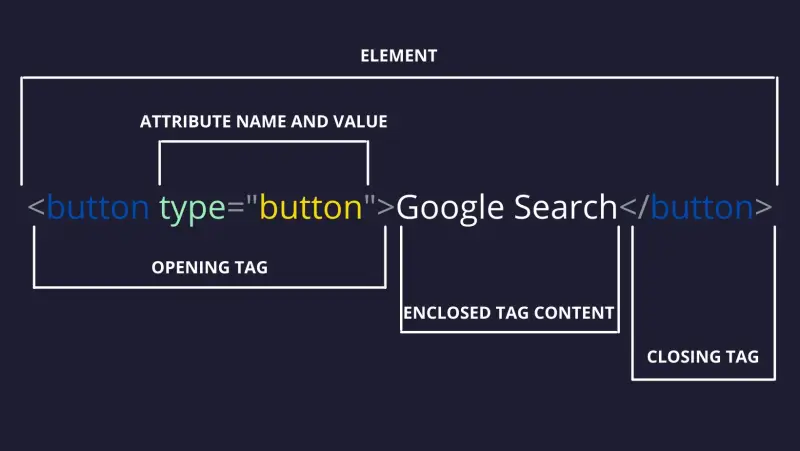
The web development posts span client-side code, servers, markup, styling and delivery. A beginner HTML guide frames the language as the structure of a page, while a historical overview follows web design from HTML toward HTML5. CSS tutorials focus on a starter set of properties and on sprites, a technique that groups multiple images into one file so a page can request them together. The latter is presented as a way to reduce separate image requests, a concern that becomes more visible on pages with many assets.

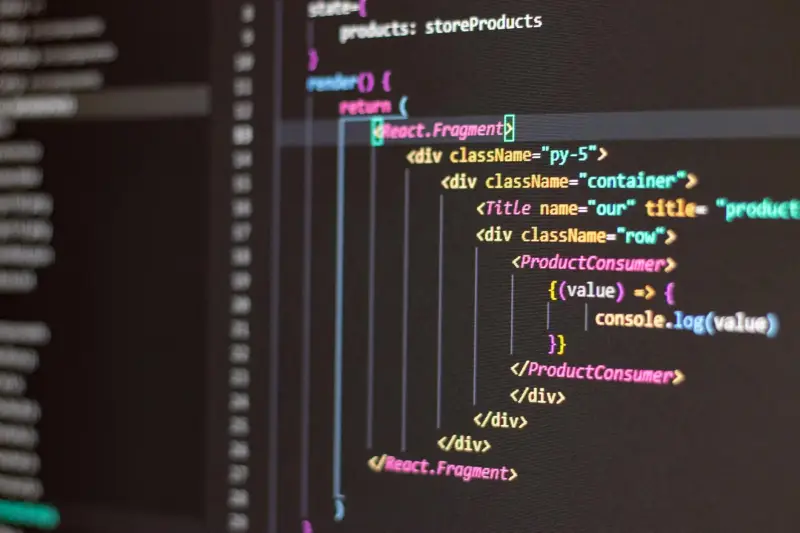
On the JavaScript side, tutorials show how to set CSS styles directly, work with React components and add script tags to a React application by appending a script element to the document’s head. Other entries address adding notifications to a React navigation bar and updating components after user interaction through React and Redux. These are practical implementation questions, but the descriptions provide limited detail about edge cases or current framework versions. Readers should treat them as starting points and check compatibility against the versions they use.
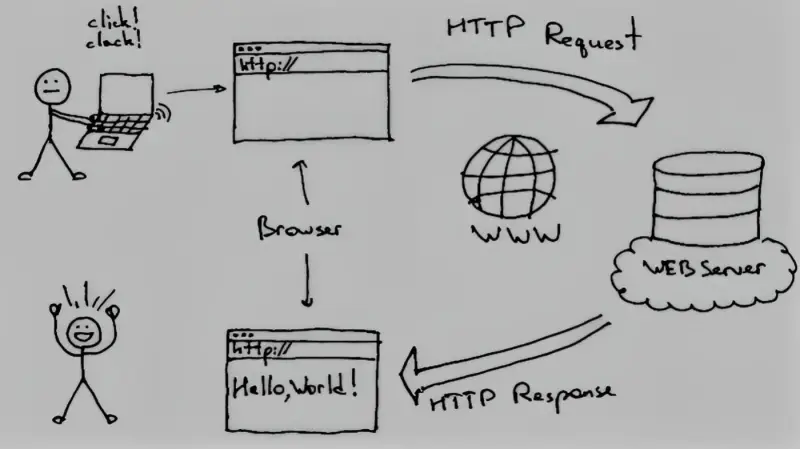
HTTP is covered from both ends of the exchange. One lesson demonstrates generating responses from a small Node.js Express server; another explores requests from a React application using XHR, Fetch and Axios. Together, they introduce a useful mental model: a client sends a request to a server, and the server returns a response that the application must interpret. Understanding that boundary helps when debugging failures that might come from request construction, server behavior or response handling.









Several guides connect the front end to persistent data. One walks through an Express application connected to PostgreSQL with Sequelize; another builds a URL shortener with Java and Spring Boot. A Rails pagination tutorial uses Pagy after populating a database with seed data, with the stated goal of seeing how the application looks when it contains many records. That is a useful reminder that pagination is both a data-access concern and a user-interface choice: rendering every record at once can become awkward as a dataset grows.
Other application topics include adding a serverless authentication service to a basic HTML, CSS and JavaScript application, using Redux to dispatch a login action in React Native, and combining AWS Key Management Service with the Serverless Application Model. The descriptions establish the tools involved, but don’t provide enough detail here to compare their configuration requirements or operational costs. For a practitioner, those are the next questions to investigate before choosing an approach for a real system.








Frameworks, types and tooling
For developers who already know some JavaScript, the React and TypeScript posts address the next layer of abstraction. The TypeScript Parameters utility type derives a tuple of argument types from a function, while Omit constructs a new type after excluding selected properties. Both are examples of type-level operations: they help describe relationships between data shapes without manually repeating every field. A guide to JavaScript promises starts from asynchronous programming and callbacks, a foundation for understanding how applications handle work that completes later.

Webpack appears as a module bundler that gathers code from separate files and packages it into a form an application can use. This can make a growing codebase easier to organize, though the short description doesn’t lay out configuration details or compare bundling strategies. A separate tutorial on using Atom as an IDE focuses on setting up a coding environment. Those setup pieces are often less glamorous than writing features, but a predictable editor and build process reduce friction when learning.
Git and GitHub receive a beginner introduction, while Git bisect gets a more focused treatment. Bisect uses binary search across a project’s commit history to locate the change that introduced a bug. That makes it a concrete example of how version history can serve as a debugging tool, rather than only as a place to store code. A repository collection also highlights GitHub as a place for documentation and learning resources, not just code hosting.





Language-specific paths extend beyond Python and JavaScript. Java resources cover learning materials and the knowledge expected of someone seeking a first junior role or trainee position. The descriptions raise questions about which tools and technologies to learn first, but don’t set out a definitive checklist. C# appears through a guide to foreach loops, including common mistakes and more advanced uses with LINQ queries and lambdas. A Ruby on Rails essay focuses on the framework’s conventions and the work required to understand the behavior it handles behind the scenes.
For developers moving into full-stack work, one guide maps a route from no prior experience toward a broader web development skill set. Another discusses building a first client website, emphasizing workflow and tools. Those are distinct goals: one is about gaining enough range to work across an application, while the other is about delivering a defined project for someone else. Both call for more than syntax, including how to break work into pieces and decide what to learn next.
Data, infrastructure and specialized areas
The collection also reaches into systems used for data and application operations. Sqoop is presented as a way to move data between relational databases and HDFS. A tutorial on Docker with Python offers a short introduction to running Python alongside containers, while a Linux introduction and several command-line guides help readers become more comfortable in terminal environments. Another post introduces virtualization, including virtual machines and containers, as ways to create isolated environments.
For server operations, a tutorial describes using iptables and knockd to configure access controls. A separate guide addresses finding exposed MongoDB connection strings in public GitHub repositories and protecting projects. These subjects are more consequential than beginner syntax exercises: they touch configuration and access to systems or data. The descriptions do not provide enough information to judge whether a specific setup is suitable for a production environment, so readers should consult current tool documentation and validate any configuration before relying on it.
Other technical areas include OpenCV for image processing in computer vision, machine learning and artificial intelligence introductions, and a guide to beginning in quantum computing without requiring a physics-heavy starting point. Blockchain coverage ranges from building infrastructure with Rust and Substrate to a Libp2p chat application, graph databases with GraphQL and Dgraph, and collections of Web3 learning resources. A post on decentralized exchanges and automated market makers discusses their role in decentralized finance, while another looks at career routes and self-employment related to blockchain gaming.








GraphQL and graph databases are grouped in one tutorial, which describes a project that ran into scaling problems with MongoDB and considered a graph-oriented datastore. The available description doesn’t provide enough technical detail to make a general database recommendation, but it points to an important evaluation question: the shape of an application’s relationships can affect how well a data model fits its queries. A separate GraphQL introduction offers a starting point for understanding the query language and its role in application APIs.
Cloud topics include AWS Lambda aliases, framed as a way to manage function versions, and the combination of AWS KMS with the Serverless Application Model. A tutorial on serverless authentication similarly introduces a small service alongside a conventional web application. These posts point toward an operational shift: some pieces of an application can be run as managed functions or services, but teams still need to understand versioning, identity, secrets and deployment boundaries.




Choose a path, then check the details
Several entries address the learning process itself. One argues that repeating tutorials can be part of building understanding because learners need time to make connections. Another gathers advice for junior developers, while a broader programming guide addresses the first decision of where to begin. These perspectives fit the collection’s practical value: there isn’t one required order, and a learner can move between explanation and hands-on work as gaps become clear.
For a first pass, choose one language and finish a small project. If the goal is front-end work, pair JavaScript fundamentals with HTML, CSS and a simple interaction. If the goal is application development, add HTTP, a server framework and a database. If the goal is systems work, practice Linux commands and container basics before exploring cloud deployment. The posts on courses, GitHub repositories and beginner resources can help fill in gaps, but the best next tutorial is the one tied to a concrete problem you can explain and test.
The collection is broad rather than uniform: it mixes course recommendations, conceptual introductions, code walkthroughs, career advice and narrowly focused implementation notes. Some entries have only a brief description, and topics such as tool versions, security configuration and cloud behavior can change. Use the list to identify a direction, then check each tutorial’s code and assumptions against the software you’re using. A small working project remains the clearest way to see whether a concept has moved from the page into your own practice.
The posts are organized by reader engagement data, so the ordering reflects what readers have chosen to open rather than a teaching sequence. The full set and other technology learning collections are available through the Learn repository and LearnRepo.com. Use them as an index, then build a learning path around the work you want to do.