Why Payment Reconciliation, Routing and Retry Logic Affect Business Revenue
- Ishan Pandey
- 482 reads
Payment records can diverge from settled funds, while poor routing and unsafe retries cost sales. Five metrics help expose the gaps.

A payment marked successful in a company’s system doesn’t guarantee that the money reached its account. Revenue can leak between checkout, payment processing and settlement, through mismatched records, avoidable declines, technical errors and fees hidden beyond the advertised processing rate. For businesses handling growing volumes across providers and countries, these are operational problems with direct financial consequences.
Dmitry Sinegubov, Chief Commercial Officer at FinteqHub, describes five areas where those losses can arise: reconciliation gaps, manual finance work, failed payment handling, inflexible routing and incomplete cost measurement.
Payment records aren’t the same as settled funds
A business may track a transaction in its own order system, a payment provider may record a different status, and the final settlement may show a third result. An order can appear paid internally even though the provider declined it. A refund may have gone through while the business still counts the original amount as received. Differences in transaction amounts and untracked fees add further gaps.
Not every mismatch means money is missing. Some discrepancies reflect delays in reporting. But when a business uses several providers, each with its own reporting format, staff must determine which differences are timing issues and which need investigation.
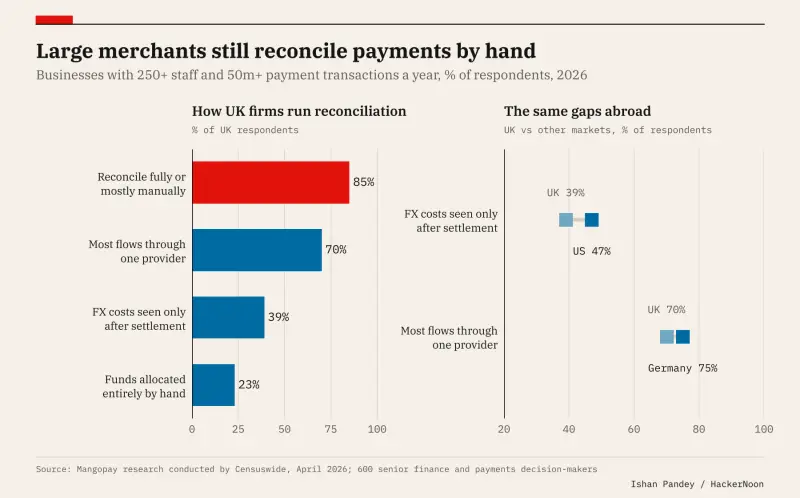
Sinegubov says FinteqHub’s Reconciliation Tool compares records from a client’s platform with provider data, flags discrepancies and directs finance staff to cases that need review. The practical value is less time spent checking transactions that already match. The tool still depends on accurate underlying records and staff attention when a discrepancy is ambiguous.
Adding staff doesn’t scale with payment volume
Connecting five new providers across different countries can mean five sets of statuses, settlement schedules, refund rules and report formats. Finance teams may need to download files, combine spreadsheets, find duplicates and trace mismatches across systems. More employees can ease the immediate backlog, but manual work grows alongside transaction volume and brings recurring costs and more chances for error.
Automation changes the division of labor rather than removing people from the process. Systems can clear routine matches automatically, while specialists investigate disputed or exceptional transactions. That approach can help teams absorb growth, provided the rules are reliable and exceptions reach the right people.
Payment errors need controlled retries
When a gateway stops responding, the business may not know whether the payment failed, succeeded or completed without a confirmation reaching the merchant. Retrying immediately risks charging the customer twice. Waiting without checking can leave a valid order unpaid and send the customer away.
Backup processing routes help keep payments moving, but they don’t settle the question of what happened to the first attempt. Reliable handling also requires accurate status tracking, safeguards against duplicate charges and a way to manage uncertain outcomes. FinteqHub’s AutoRouting system includes primary and fallback routes, plus safeguards for cases where standard routing rules don’t apply. Some payments still need their status resolved before a retry is safe.
A single provider can leave approvals on the table
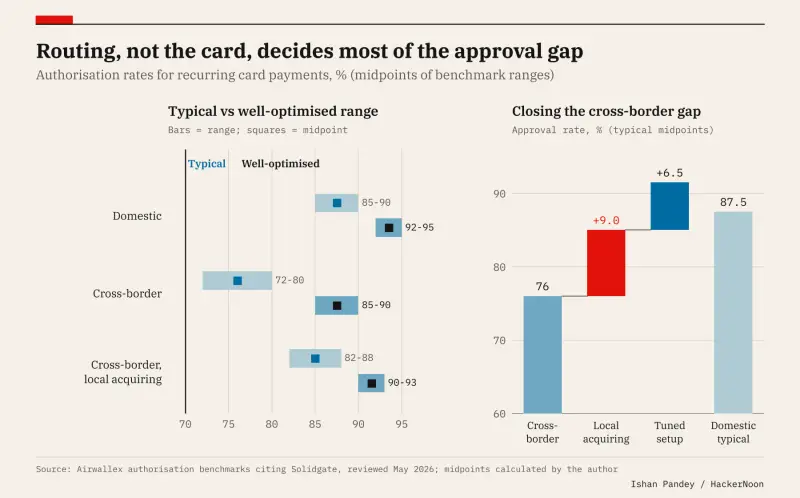
Provider performance can vary by card issuer, country and currency. A route that handles cards from one market well may produce more declines for another. Businesses relying on a single route can therefore miss approvals that a different provider might have captured.
That makes the company-wide approval rate a blunt measure. Sinegubov recommends examining performance by payment segment. At €10 million in monthly payment attempts, a one percentage point increase in approvals could mean about €100,000 more in approved payment volume, assuming a comparable transaction mix. That figure isn’t additional profit: processing costs, operating expenses, refunds and final settlement all affect what the business keeps.
AutoRouting organizes routes using characteristics such as country, currency and card brand. It’s designed to distribute traffic while weighing route reliability, including when a newer or less established processing terminal may be worth trying. The key question for a merchant is whether segment-level improvements persist after fees and completed settlements are counted.
Measure the cost of a successful payment
An advertised processing rate covers only part of the bill. Acquiring and card network fees, currency conversion, cross-border charges, refunds, chargebacks and fees on unsuccessful transactions can all add to the cost. Staff time spent reconciling reports and investigating discrepancies belongs in the calculation too.
Sinegubov proposes tracking five indicators: actual cost per successful payment; approval rate by country and payment method; the share of unexplained reconciliation discrepancies; time to resolve those cases; and losses tied to technical failures. Together, they show where a business pays through both processing costs and revenue it fails to capture.
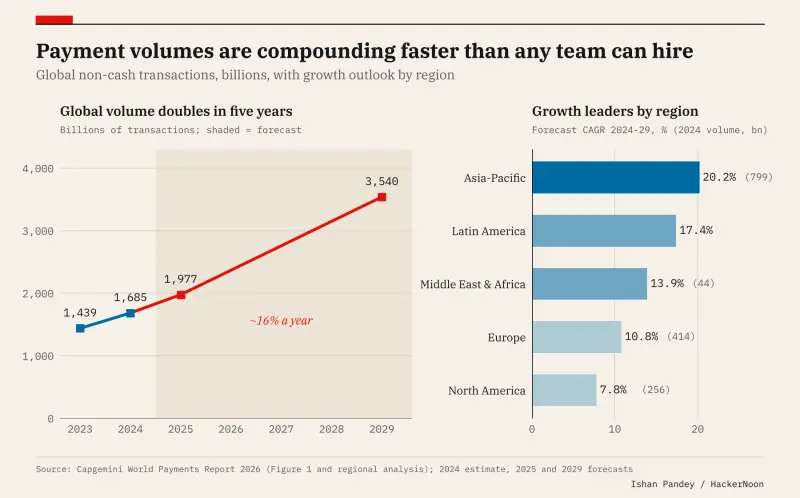
Non-cash transaction volumes are forecast to reach 3,540 billion worldwide by 2029, increasing the number of flows finance teams may need to track. FinteqHub has also introduced an AI Advisor for payment routing; beta clients linked it to a 23% reduction in blocked and declined payments. Those results are attributed to the company and its clients, so the key test for other businesses is whether routing changes improve their own settled revenue after costs. Payment operations become easier to manage when reconciliation, routing and error handling are measured against money actually received.


