Percona’s Phuket Meetup Put Remote Team Trust to Work
- Kedar Vaijanapurkar
- 985 reads
Percona’s EMEA and APAC teams met in Phuket for technical sessions and informal time together, connecting team trust with customer support and open source work.
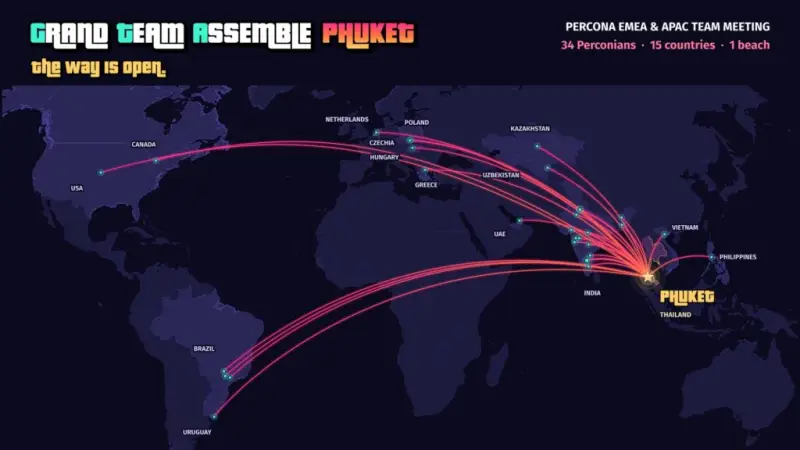
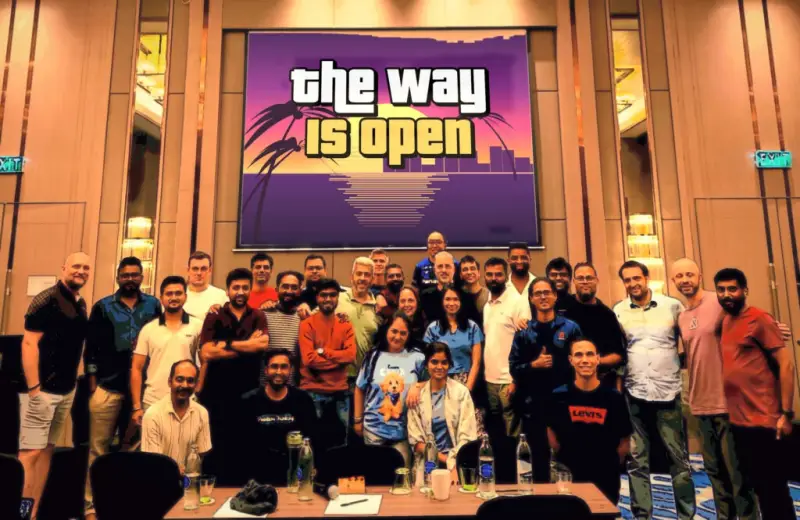
Percona’s Phuket meetup made a practical case for in person time at a remote company: colleagues who know one another can collaborate with more trust when customer issues get difficult. The gathering brought together Percona’s EMEA and APAC teams in Thailand for technical sessions, planning and the less structured conversations that are hard to reproduce over video calls.
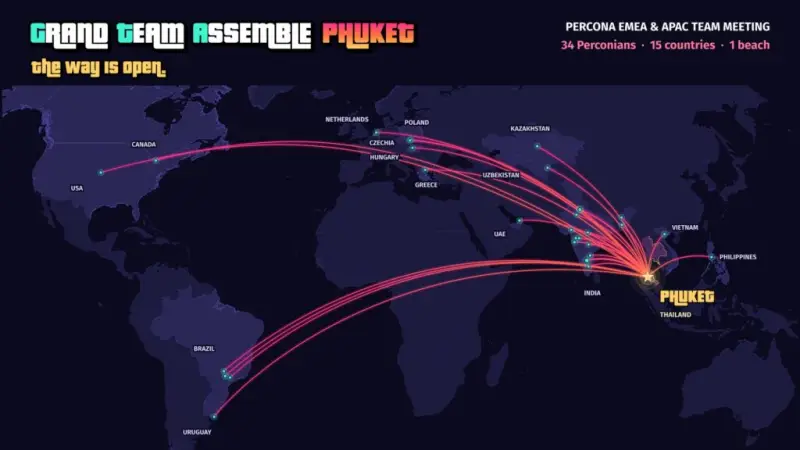
That connection matters in a company whose employees work across more than 50 countries. Percona has operated remotely for years, and some colleagues had collaborated for a long time without ever meeting face to face. One attendee, for example, met a coworker in person after 12 years of working together. For a distributed team, the meetup was an investment in working relationships as well as a chance to share updates.
Why bring a remote team together?
Percona’s leadership has argued that face to face meetings make day to day work easier by helping employees understand one another and build trust. That has a direct bearing on technical support: during a production incident, a database administrator needs to coordinate quickly with colleagues, often under pressure. Familiarity can make those exchanges clearer and help teams focus on resolving the customer’s problem.
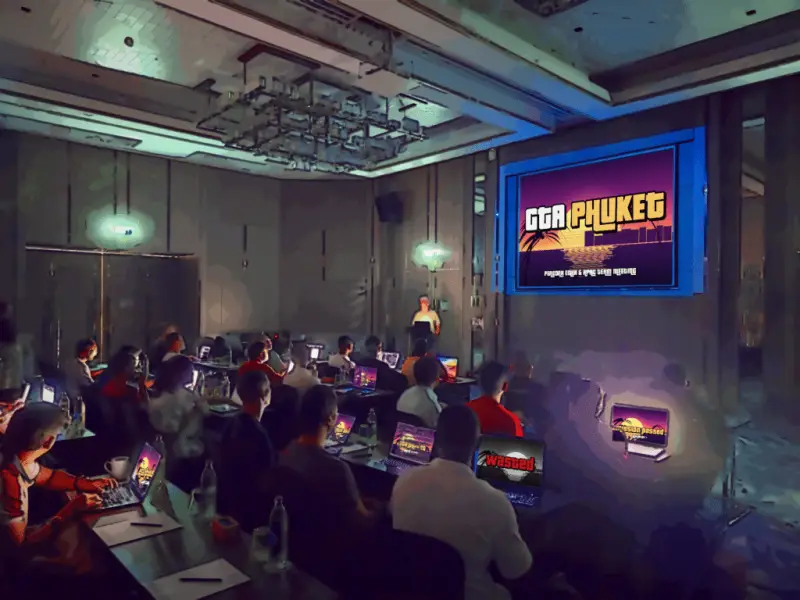
The company has used in person gatherings since at least 2007, when employees met in Hurghada, Egypt. The team has since grown substantially, but the reasoning remains similar. Percona now meets in groups so staff can build connections while continuing to serve customers. The Phuket event took place in the year the company turned 20.
Remote work tools keep people connected across time zones, but they offer fewer chances for informal conversation. In Phuket, those conversations happened between sessions and over meals as much as in scheduled meetings. That distinction is useful: a gathering’s value can come from creating trust that carries into later work, not just from the agenda itself.
Colleagues teaching colleagues
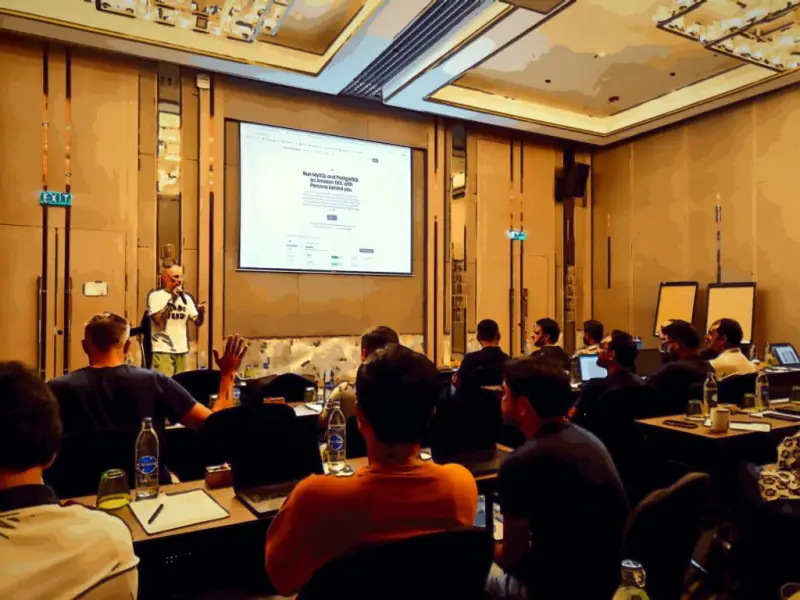
The technical program was led by Percona employees, with sessions focused on customer support, the open source community, managed database services and AI tools for database operations.
Customer escalations and community participation
Peter Sylvester’s session covered how to handle difficult customer escalations, identify what a customer actually needs and remain on their side when something goes wrong. The emphasis was on putting customer needs first in the practical work of services teams.
Daniil Bazhenov presented Percona’s community work and ways people can contribute. Percona’s software is open source, with the company describing its approach as keeping features available without an enterprise tier and working with upstream projects. The session covered contributions to blogs and forums, along with community programs, educational events and meetups. Participation isn’t limited to employees; interested users can join discussions on the Percona Community Forum.
Percona Database Service and AI-assisted operations
Andrey Glazkov demonstrated Percona Database Service (PDS), the company’s managed services offering, and gathered direct feedback from colleagues. The discussion centered on the service’s capabilities and how it could serve customers and the broader community. Percona presents PDS as open source; teams evaluating it can explore the service at pds.percona.com.
Two sessions examined ways AI could support database work. Adamo Tonete showed how to connect Percona Monitoring and Management (PMM) to AI assistants through the Model Context Protocol (MCP), allowing users to ask monitoring questions in plain language. Alok Pathak demonstrated Sixta using PMM metrics in a troubleshooting workflow intended to reduce DBA workload.
The demonstrations point to an assistive role for AI: it can help people query monitoring data and move through diagnostic work, while DBAs still provide the expertise and judgment. The practical questions are how well these workflows fit existing operations, what they save teams in real use and how they behave when an incident requires fast, reliable answers.
Other colleagues, including Ananias and Jobin, also gave presentations. The program paired technical exchange with internal planning, giving teams a chance to share knowledge across functions and regions.
Team activities built connections outside work
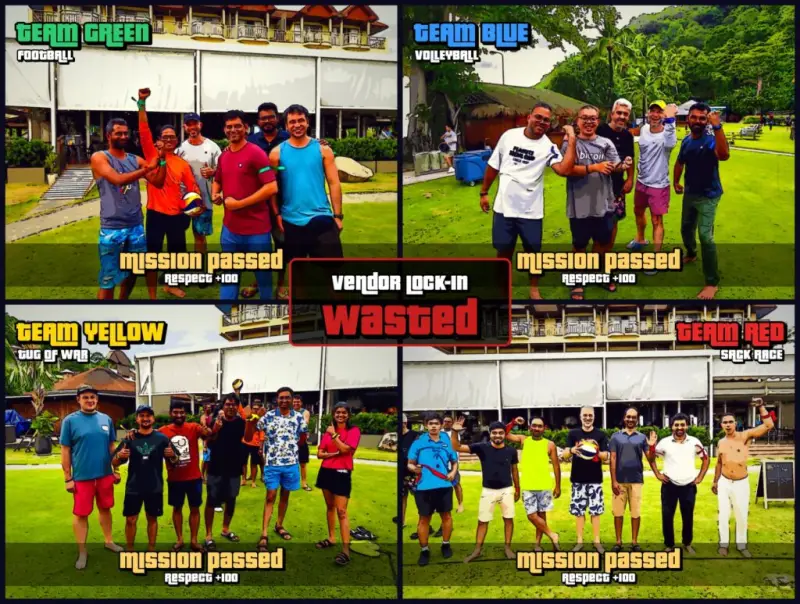
The meetup also included a Mini-Olympics, with four teams made up of people from EMEA, APAC and other time zones. Participants who rarely work together competed in activities such as tug of war and football. The format offered a simple way to meet coworkers outside their usual teams; one attendee nearly injured a foot during the football event and credited teammates with helping them recover.

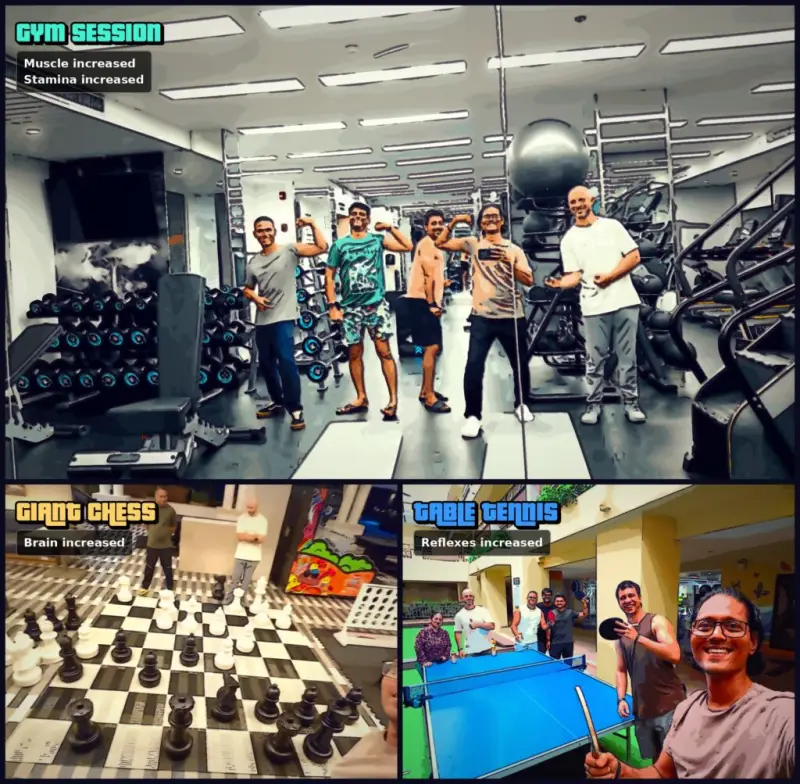
Informal activities continued at the hotel gym and through table tennis and chess. Colleagues compared exercise routines and discovered one another’s interests without the usual focus on MySQL, PostgreSQL or MongoDB. These unplanned encounters helped people see coworkers as individuals, not only as names attached to tickets or calls.
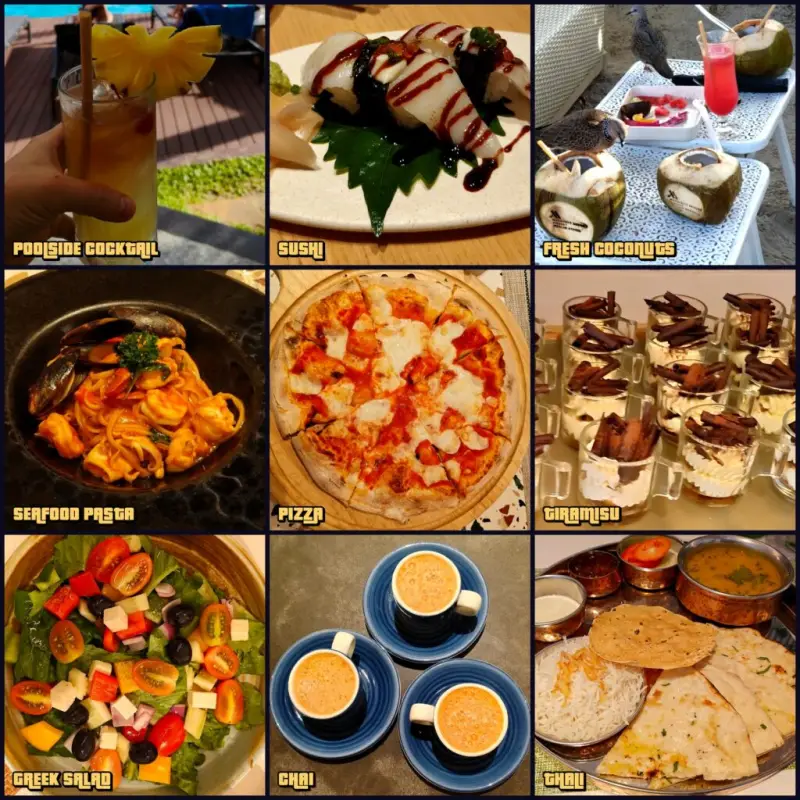
Meals also created space for conversation. Shared dishes, including spicy som tam, prompted exchanges about food and personal backgrounds. The group stayed at the Phuket Marriott Resort & Spa at Merlin Beach. Some attendees explored Phuket after work, while others stayed on after the meetup. Poolside, by the beach and on the hotel lawns, conversations ranged from cooking and games to previous jobs and life outside the company.
Open source as a working principle
Several themes from the meetup connect back to how Percona describes its work: customer needs come first, teams should look for better ways to solve problems, and software should remain open. The company’s stated approach is to avoid locking users into proprietary features and to contribute to shared projects. Its about page describes open source as a core belief.
That principle has a practical dimension. Users can choose software on its merits, while contributions to upstream projects can benefit people beyond Percona’s own customer base. The meetup gave employees working in services, support and community roles a chance to compare how those values show up in day to day work.
Percona’s Phuket gathering wasn’t separate from the company’s work. Its sessions addressed customer escalations, community participation, managed services and emerging AI workflows, while the informal time aimed to strengthen relationships across a widely distributed team. The next test is how those connections and technical ideas translate into better collaboration on customer cases and into useful, well-grounded AI support for DBAs.