TikTok Shop Gets a Standalone App in Four Southeast Asian Markets
- John Smith
- 590 reads
TikTok’s separate Shop app brings product videos, livestreams and checkout together, testing whether discovery can turn into a dedicated shopping habit.
TikTok is testing whether its shopping business can earn a place on people’s phones as a destination in its own right. The company has released a standalone TikTok Shop app for iOS and Android in Singapore, Malaysia, Thailand and the Philippines, giving shoppers a direct route to product browsing and checkout without first opening the main TikTok app.
The shift changes the starting point for the shopping experience. Inside TikTok, people may encounter a product while watching a makeup tutorial, cooking clip or creator recommendation. A dedicated app instead starts with the shopper’s intent: browse, compare, watch a product in use, then decide whether to buy. Videos and livestreams remain part of the Shop experience, according to the app listings, but they now sit inside an app opened specifically for shopping.
That distinction matters for how TikTok competes for attention. Services such as Amazon and Temu are places people may open because they already plan to browse or purchase. TikTok Shop’s separate app puts it in that same moment of intent, while retaining the video-led discovery that helped bring products to viewers in the main feed. Whether that combination becomes a regular habit is the test; the launch alone doesn’t show how often people will return or how much they’ll buy.
What the app includes
The Apple App Store listing describes personalized product recommendations, short product videos, livestreams, checkout, order tracking and around-the-clock customer support. The listings also promote deals available through the app, free-shipping offers and perks for first-time orders. Taken together, those features cover several stages of a purchase: finding an item, seeing it demonstrated, completing the transaction and checking its delivery progress.
For merchants and creators, keeping video and livestream shopping in the same app as checkout could shorten the path from attention to purchase. For shoppers, the trade-off is a dedicated place to browse that may make product discovery more intentional. The practical value will depend on what products are available in each market, how useful the recommendations are and whether the app gives people a reason to choose it over shopping services they already use. The available information doesn’t specify those details.
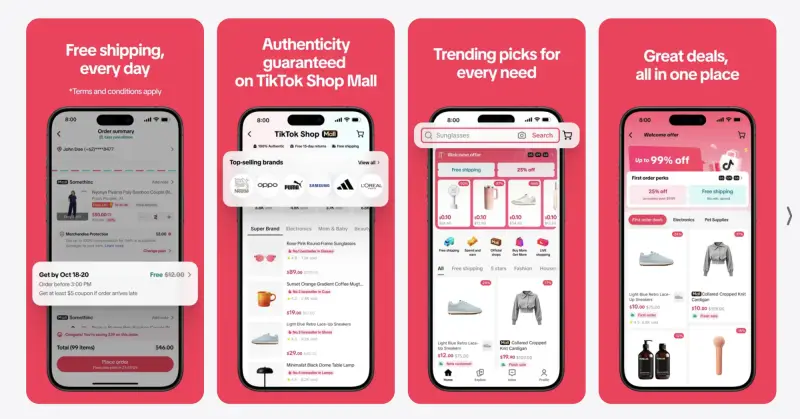
Early store figures offer only a small snapshot. Google Play shows more than 50,000 downloads. In Singapore’s Apple App Store, the app was listed at No. 71 in the shopping category, with one five-star rating. Those figures are specific to the listings at the time they were observed; they don’t establish customer retention, sales or the app’s standing across all four markets. The Apple listing showed version 45.5.5 as its latest iOS update, released shortly before the app was reported on Nov. 5.
A separate product, with an uncertain reach
TikTok’s Singapore App Store listing identifies TikTok Pte. Ltd. as the app provider. The source describes that company as separate from TikTok USDS Joint Venture, which operates TikTok in the United States and handles U.S. data security, recommendation algorithms and content moderation. TikTok’s global business continues to manage commercial activity such as e-commerce. That corporate distinction gives no indication by itself that a U.S. Shop app is planned.
The company hasn’t confirmed whether it will bring the standalone app to the United States. For now, the launch is a four-market test, and the available details leave open how TikTok will judge its success. App downloads and store ranking can show initial interest, but repeat use and completed purchases would give a clearer picture of whether shoppers want a separate destination.
TikTok is building services around specific habits
Shop fits a wider pattern in TikTok’s product experiments: taking an activity that can begin in the feed and giving it a more focused service. TikTok GO, launched in May, lets U.S. adults book accommodations, tours and attractions through partners including Booking.com, Expedia and Viator. Eligible creator content can earn commissions, linking travel recommendations more directly to reservations. TikTok describes the flow as moving from discovering a place in a video to checking availability and booking it.
The company has also launched Must Eat, a restaurant guide covering areas around New York City, Los Angeles and the San Francisco Bay Area. It draws on more than 40 million posts, reviews and comments to organize food recommendations into searchable lists, with OpenTable reservations available for some restaurants. Separately, PineDrama puts short dramas into a dedicated app with personalized recommendations and tools for browsing series and episodes.
These products point to a consistent product question: can TikTok serve people when they arrive with a specific task, as well as when they’re casually watching a feed? Shop is a direct test of that idea in commerce. Its next signs of progress will be whether people return to browse, whether the shopping features work well across the four markets, and whether TikTok extends the app to more regions. For now, the main change is clear: product discovery inside the feed has a new, standalone home.